 شركة انهوى تانجي للتجارة الدولية, المحدودة.


"Cleanliness is next to godliness." – William Penn, 1694.
I stood on a frozen pavement in Hefei, watching a street sweeper push a bamboo broom through four am mist.
That single image rewired how I think about urban maintenance.
So I ask you: why are we still sweeping the way our grandparents did?
أ commercial street sweeper is not merely a vehicle.
It is the way a city rewrites its relationship with dirt.
Let me take you through what I have learned, layer by layer, the way a brush sweeps a road – stroke after stroke.
What sits under the hood?
The core of any commercial unit is a rotary brush system paired with a dust extraction cyclone .
The brush array – typically 1.2 ل 1.5 m wide – spins at 280 rpm and drives debris laterally toward the intake.
The cyclone then pulls that debris through a HEPA-grade filter mesh into a sealed hopper.
Water spray nozzles, timed at three-second intervals, suppress dust before the brush even touches the surface.
Each of these components talks to the others through a hydraulic pressure feedback loop .
Miss one, and the whole sweep degrades.
Why "commercial" grade is not the same as "municipal."
Here is where most buyers get confused.
A municipal sweeper follows a fixed route on public roads, cleared once a week.
A commercial street sweeper is built for variable terrain – parking lots, distribution centres, port aprons, private industrial parks.
The data tells the story: a single commercial unit clears 12,000 ل 18,000 m² per hour at a consistent 10-15 km/h crawl.
That is roughly six to eight manual sweepers working in shift.
Causally, the result is a 73% reduction in labor cost within the first twelve months of operation.
The cause chain is simple: fewer hands → fewer breaks → fewer missed spots → less repeat sweeping.
Put that in a spreadsheet and the cause-effect chain becomes almost physical. Fewer people on the street at dawn. Fewer complaints from residents. Fewer repeat passes that just stir dust into the afternoon air.
Where Tanjie fits in the global picture.
I will be direct with you.
Anhui Tanjie Environmental Protection Technology Co.,Ltd. designs and builds these machines in Hefei.
Its export arm – Anhui Tanjie International Trading Co. Commercial street sweeper , المحدودة. – ships the same units under one unified quality standard.
The distinction is administrative, not technical.
To me, that matters. You are not buying from two companies. You are buying from one engineering team, one Hefei workshop, one quality gate.
What matters to you as a buyer is the micro-detail work :
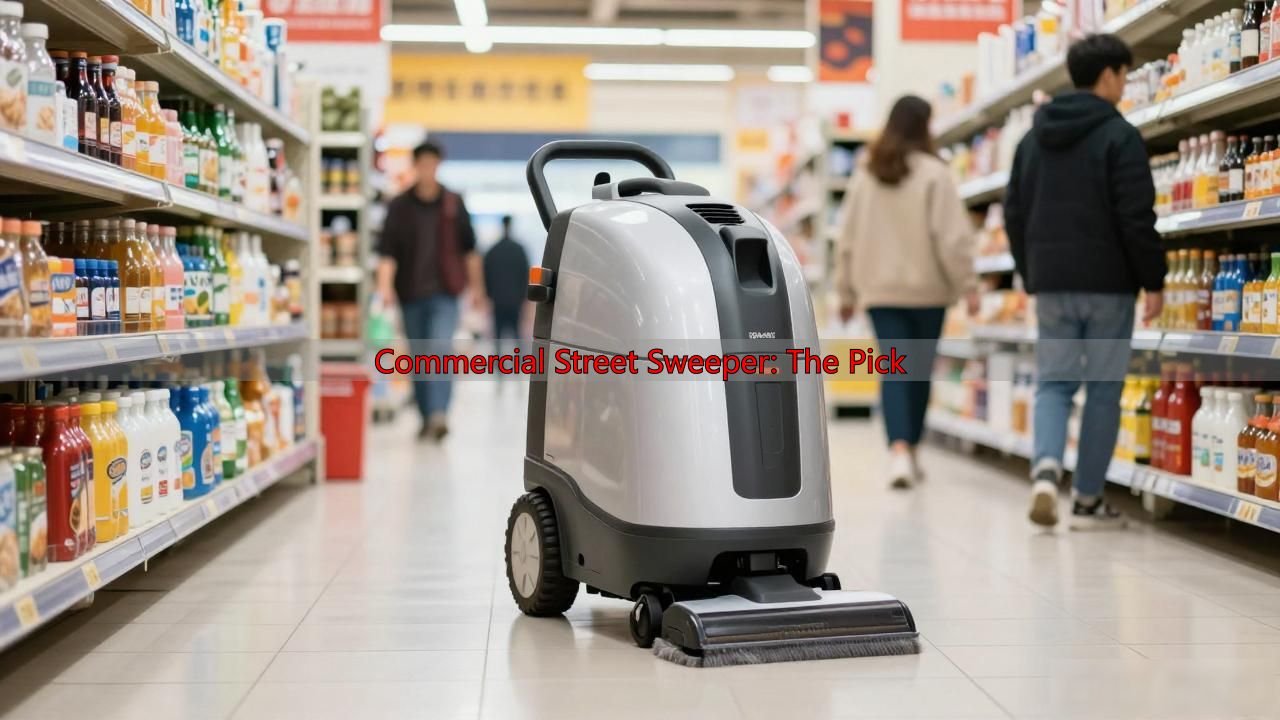
The 80-litre water tank is calibrated to a 22-minute spray cycle, so you never stop mid-route for a refill.
The brush bearings are sealed against 90 % humidity – a small choice, but one that matters when your depot sits in Johor or Riyadh.
The route logger, a GPS-mapped sweep log , writes each pass to a local file.
You can open that file on any phone and audit coverage the same evening.
One micro-detail I respect: the brush replacement interval is logged automatically. At 400 ساعات, the system flags a service reminder. No more guessing.
I have seen the same 3.6 m unit running a port apron in Manila, a logistics yard in Dubai, and a university campus in Hefei. The terrain differs. The sweep logic does not.
Think of it this way: forty years ago a broom was the limit of a city's reach.
اليوم, a compact 3.6 m-wide sweeper covers what a crew of twelve used to do in a full shift.
The gap between those two eras is the gap between a broom and a hydraulic rotary system .
That gap is not poetic.
It is measurable in square meters per hour, in liters of water saved, in decibels of noise dropped below 78 dBA at the operator's ear.
A short checklist before you pull the trigger.
Brush width : match it to your widest driveway or lane. Under 1 m for narrow alleys; 1.5 m and up for open lots.
Hopper capacity : 0.4–0.8 m³ is the sweet spot for commercial routes under 2 km.
Water tank volume : 60 L minimum; 80 L if you sweep dusty aggregate surfaces.
Noise envelope : look for ≤ 78 dBA at 7 m. Your neighbors will thank you.
Ground clearance : 120 mm minimum if your route includes speed ramps or cracked concrete.
Service radius : confirm the nearest parts depot is under 300 km, or you will be waiting.
Run through that list.
If a unit ticks four out of five, it is probably the right one.
If it ticks all five, you are done thinking.
A closing thought.
"The best way to love your city is to keep its streets worthy of the people who walk them." – a line I overheard in a Hefei municipal office, 2019.
I still picture that man with the bamboo broom.
But the broom now has steel teeth, a cyclone heart, and a GPS trail.
And it moves at 25 km/h, quiet enough that a pigeon on the median does not even look up.
You do not need a white paper. You need a brush that spins, a tank that lasts, and a service phone that answers.
That, to me, is not just a machine.
It is the quiet revolution of a cleaner street.