 Anhui Tanjie International Trade Co., Ltd.


Every hour that a warehouse floor stays coated in grime is an hour your facility's operational reputation takes a quiet, compounding hit.
The dirt accumulates like a slow tide, seeping into the pores of concrete, bonding with tile grout, and settling into the very structural bones of your building.
So what, in practical terms, actually stops a high-traffic industrial floor from slowly becoming a slip-and-fall hazard zone?
The answer has been sitting in industrial equipment catalogs for nearly eight decades, waiting for the right operator to pick it up: -en floor scrubber machine.
Those early hand-pumped machines of the 1950s were crude by today's standards, their single brush rotating at a pace that makes modern operators wince when they watch the archival footage.
Before that era, crews hauled heavy buckets of chemical solution and pushed broad mops across thousands of square feet, their lower backs screaming by the second hour of shift.
That bucket-and-mop method was certainly faster than bare hands, but it left the surface half-wet, the chemical residue clinging to every seam like a stubborn, invisible stain that no amount of raking could fully lift.
The downstream consequences were predictable and costly: a measurable spike in slip incidents, a maintenance budget that crept upward quarter after quarter, and a workforce that began to associate the floor with a low-grade, ever-present mess.
A modern floor scrubber machine is nothing less than a compact tidal wave sealed inside a steel and polymer shell, sweeping, scrubbing, and extracting contaminated water in one continuous Gulvskrubber maskine , almost hypnotic pass!
Under the hood, it pairs a metered high-pressure water spray with a high-RPM rotating brush scrubber and a vacuum-powered squeegee system that pulls the dirty solution back into a sealed recovery tank with mechanical precision.
The whole process is governed by a simple hydraulic schematic that any certified technician can trace with a marker on the service manual, which is exactly how Tanjie structures every unit that leaves its assembly line.
And that is precisely where Anhui Tanjie International Trading Co., Ltd. enters the story.
As the dedicated export and trade arm of Anhui Tanjie Environmental Protection Technology Co., Ltd., Tanjie International has spent well over a decade refining both ride-on and walk-behind floor scrubber machines for the global commercial market.
Every model that carries the Tanjie badge is calibrated on the same test floor, using the same concrete slurry mix, so that a machine shipped to São Paulo performs identically to one shipped to Birmingham.
Picture a mid-sized distribution center in Rotterdam: forty thousand square meters of polished concrete, six forklift drivers crossing the floor every hour, and a surface that used to require three full-time technicians for two entire days to bring back to acceptable condition.
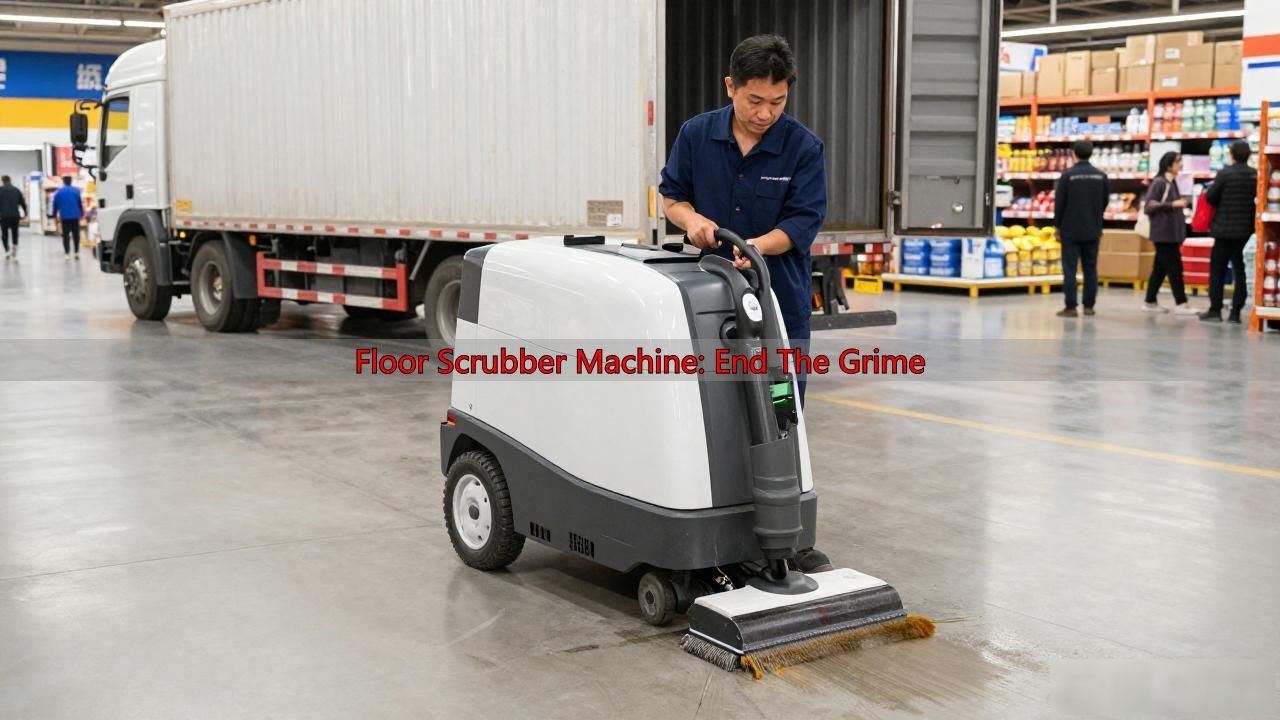
Then one of Tanjie's automatic scrubber machines arrived on a pallet, and the entire cleaning crew shrank to a single operator working a forty-minute shift before the first delivery trucks pulled into their bays!
Watch a Tanjie operator for five minutes and the rhythm becomes almost musical: the hum of the motor, the soft thump of the brush engaging the pad, the quiet hiss of the squeegee pulling clean water behind it.
Looking further ahead into the next ten or fifteen years, smart sensor arrays, onboard AI-driven speed modulation, and self-diagnostic telemetry will make these machines even more autonomous, reading floor markings and adjusting scrub pressure in real time without a human hand on the controls.
What genuinely worries me, though, is the number of facilities still running bucket-and-mop routines in 2026 while their competitors across the border are shaving labor costs by as much as sixty percent with a single ride-on unit from a manufacturer like Tanjie.
You might reasonably ask, "But can a machine really outperform a team of dedicated, experienced floor-care workers?" The aggregated field data from Tanjie's global install base says a clear and unambiguous yes.
The underlying principle rests on straightforward deductive logic: a consistent mechanical pressure applied at a uniform angular speed will always, mathematically, outperform a variable human pressure applied at a variable, fatigued pace.
In practice, that translates to a Tanjie scrubber hitting every square centimeter of floor at the identical torque, the identical RPM, and the identical chemical dilution ratio, whether the clock reads 06:00 or 22:00.
Think of it as giving your floor the same steady, reliable heartbeat that a perfectly tuned diesel engine delivers, unbroken and unchanging regardless of which shift crew walks in that day.
For facilities operating in regions where surface contamination triggers strict regulatory penalties and mandatory inspection cycles, that mechanical consistency is not a comfort feature; it is a compliance shield you simply cannot afford to remove.
Once the floor is genuinely clean, fully dry, and free of residual chemical film, the downstream effects cascade outward in ways most operations managers never calculate: fewer product contamination events, measurable reductions in overhead lighting costs because a reflective clean surface throws light back into the room, and a workforce that walks through the space with a quiet, unspoken pride.
It is the kind of invisible improvement that never makes the company newsletter but shows up, silently, in the annual facility audit as a line item that simply vanishes.
I can already see the 2032 smart-warehouse pilot programs where a Tanjie scrubber, fitted with a LiDAR array and an onboard vision camera, maps its own cleaning path, avoids dynamic obstacles, and files a digital floor-condition report into the facility's ERP system before the first shift even clocks in.
The floor scrubber machine, in the end, is not a gadget or a convenience; it is the quiet, mechanical revolution that permanently separates a facility that merely manages dirt from one that simply refuses to let it settle.
And at Tanjie International, that revolution ships from a single origin, under one company name, with a standing promise that the surface beneath your feet will never have to be compromised again.