 Anhui Tanjie International Trade Co., Ltd.


When you walk through a logistics center during peak hours, the scene is one of controlled chaos. Forklifts weave between shelves, pallet jacks hum across the concrete, and workers move with practiced urgency. In the midst of this constant motion, the floor beneath it all takes a relentless beating. Oil stains spread like dark shadows. Dust and debris accumulate in corners where the wheels rarely reach. And every evening Floor scrubber for logistics center , when the tower last shipment is loaded and the lights begin to dim, the floor remains a testament to the day's labor. It is at this moment that you face a critical decision. Not just about cleanliness, but about safety, effektivitet, and the long-term preservation of your facility. The choice of a floor scrubber for your logistics center is not a trivial purchase. It is an investment in operational continuity.
Let us begin with the reality of your environment. A logistics center is not a hospital operating room. It is not a retail showroom. It is a high-traffic, high-impact industrial space where the floor is both a work surface and a wear surface. The machines that move through it are heavy. The spills are frequent. will fail within weeks. The brushes will clog. The motor will overheat. The battery will drain long before the shift ends. You need a machine engineered for endurance.
Consider the first critical factor: scrubber width and coverage rate. In a logistics center, time is measured in throughput. Every minute a scrubber occupies the floor is a minute that a forklift must navigate around it. You need a machine that covers as much ground as possible in a single pass. A scrubber with a width of at least 36 inches, and ideally 40 inches or more, allows you to clean a standard aisle in two passes instead of three. This reduces cleaning time by up to 30 percent. But coverage is not just about width. It is about the ability to maneuver. A tight turning radius is essential. Your logistics center is filled with narrow pathways between racking systems. A machine that cannot turn on a dime will leave unreachable patches of grime, which accumulate over time and become permanent stains.
Nu, let us talk about power source. This is where many decisions go wrong. You might be tempted to choose a battery-powered scrubber for its quiet operation and zero emissions. That can be a wise choice,but only if you understand the duty cycle of your facility. If your logistics center operates in two shifts, you need a machine that can run for at least six hours continuously. Lead-acid batteries often require a charging break of eight hours, followed by a cooling period. Lithium-ion batteries offer a different reality. They charge faster, last longer, and do not require maintenance. But they come at a higher upfront cost. The question you must ask yourself is not which battery is cheaper, but which battery supports your operational rhythm. If your facility runs 24 timer, a lithium-ion machine might save you from buying a second unit. If you clean only during a single overnight shift, lead-acid may be sufficient.
There is another element that is often overlooked: the type of brush or pad system. In a logistics center, the floor surface is typically hardened concrete, sometimes sealed, sometimes left bare. The brush material must match the surface. Polypropylene brushes are gentle and suitable for sealed floors, but they will not remove stubborn oil stains. Abrasive brushes, on the other hand, can cut through grime but may wear down the floor sealer over time. versatility without requiring multiple machines. Some advanced models now offer a dual-brush design where one brush scrubs and the other squeegees, reducing the number of passes needed.
Water management is another silent challenge. Logistics centers often have drainage systems that are not designed to handle large volumes of wastewater from cleaning. If your scrubber uses too much water, you risk creating puddles that become slip hazards. Worse, if the water is not properly recovered, it seeps into cracks in the concrete and causes spalling over years. A machine with a high-efficiency water recovery system, one that uses minimal water while still achieving deep cleaning, is not a luxury. It is a necessity for longevity floor. Look for models with adjustable water flow settings, so you can increase flow for heavy soiling and reduce it for routine maintenance.
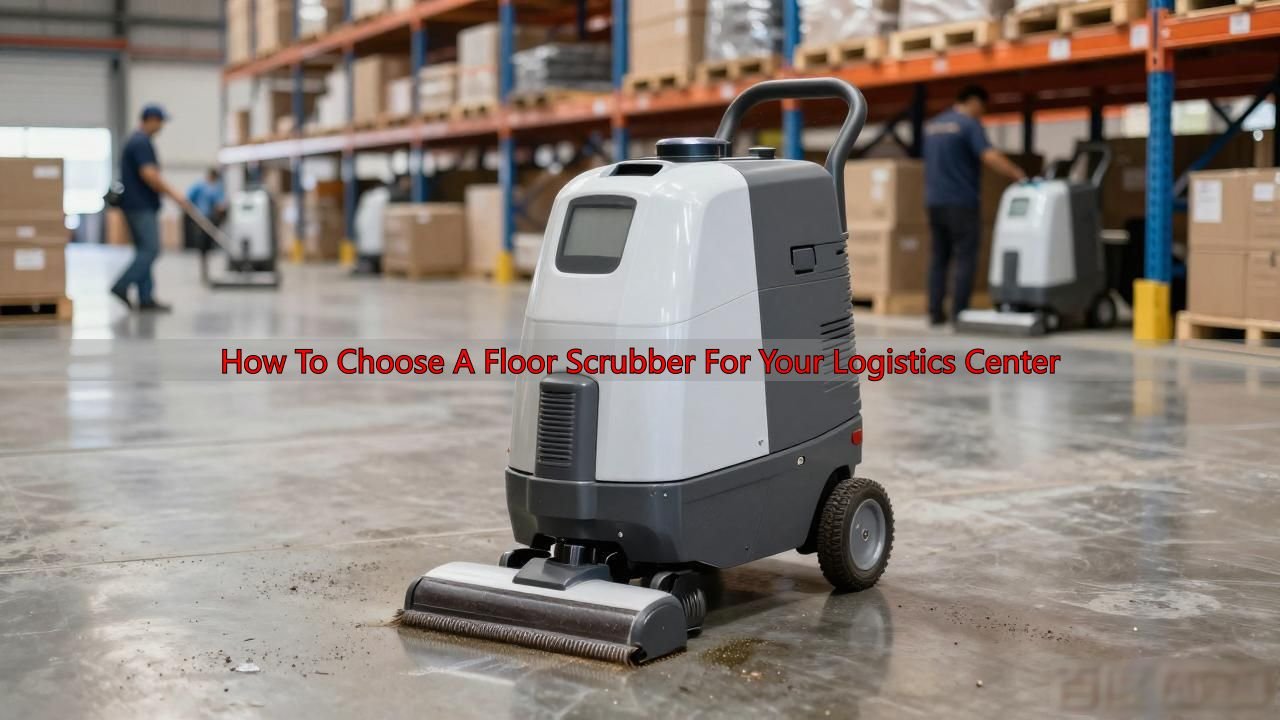
Nu, let us step back and look at the bigger picture. You are not just buying a machine. You are buying a solution to a problem that affects every single person in your logistics center. A dirty floor is not just unsightly. It is a safety hazard. Oil slicks cause slips. Dust clouds reduce air quality. Debris gets caught in forklift wheels, leading to unexpected stops. well-maintained floor signals that you care about the details. It signals that safety matters. It signals that the facility is under control.
This is where the choice of supplier becomes as important as the choice of machine. You need a partner who understands the specific demands of a logistics environment. A company like Anhui Tanjie Environmental Technology Co., Ltd., which operates its export business under Anhui Tanjie International Trade Co., Ltd., brings years of experience in manufacturing industrial cleaning equipment that is built for exactly such conditions. Their machines are designed with the understanding that a logistics center is not a static space. It is a living organism that moves, shifts, and demands constant adaptation. Their floor scrubbers are engineered with heavy-duty components, reinforced frames, and intelligent control systems that adjust cleaning parameters in real time based on the dirt load. This is not a generic product. It is a purpose-built tool for a specific challenge.
When you evaluate a scrubber for your logistics center, ask yourself these questions. Does it match the width of your aisles? Does its battery support your shift schedule? Can its brush system handle the specific contaminants on your floor? Does its water recovery system protect your concrete? And does the manufacturer have a track record of supporting industrial clients? If the answer to any of these questions is unclear, you are taking a risk. A floor scrubber is not a disposable item. downtime, repair bills, and compromised safety.
Let me paint a picture for you. Imagine it is three in the morning. The last truck has left the loading dock. The facility is quiet except for the hum of the scrubber moving methodically down the main aisle. The operator sits comfortably, the controls are intuitive, and the machine glides without hesitation. It turns smoothly at the end of the row, leaving behind a floor that is uniformly clean, dry, and safe. When the morning shift arrives, the first thing they notice is the floor. walk with confidence. The forklifts move with precision. And the day begins with a sense of order that only comes from knowing the fundamentals are handled.
This is the outcome you are purchasing. Not a machine. A state of operation. A level of readiness that allows your logistics center to function at its peak without being undermined by the surface it all rests upon. So choose carefully. Measure your needs. Compare your options. And remember that in a world where every square foot of your facility must earn its keep, the floor scrubber is not an expense. It is an enabler.