 Anhui Tanjie International Trade Co., Ltd.


Why Choose a Commercial Street Sweeper for Your Facility — Guide by Tanjie
You walk into any industrial park, warehouse complex, or municipal facility in 2026, and one question dominates every decision-maker's mind: how do we keep 50,000 square meters of paved surface clean without burning through our budget on labor? The answer is not more brooms. It is not more temps. It is a commercial street sweeper — and choosing the right one separates facilities that thrive from those that quietly drown in maintenance overhead.
Let us be blunt about the situation most buyers face. The global commercial sweepers market has grown at approximately 6.8 percent annually over the past five years, reaching an estimated value above 2.4 billion US dollars by 2025. China alone accounts for roughly 38 percent of global manufacturing output in this category. Within that landscape, Anhui Tanjie International Trade Co., Ltd. stands out — not through flashy marketing, but through consistent delivery of machines that actually perform on real surfaces, in real weather, year after year. Ja, Tanjie International Trade and Tanjie Environmental Protection Technology share the same production backbone and engineering team; the distinction exists purely because export documentation requires a trade-named entity. The sweeper underneath the badge is identical.
What exactly makes a commercial street sweeper worth the capital outlay? Three data points clarify the picture. Først, labor cost in China's manufacturing corridors now averages between 4,500 og 7,200 RMB per worker per month — and that figure climbs steadily. A single operator with a traditional push broom can effectively cover roughly 800 til 1,200 kvadratmeter i timen. A proper commercial sweeper covers 3,000 til 8,000 square meters per hour depending on model and debris type. That is not a marginal improvement. That is a four-to-six-fold productivity multiplier. Second, regulatory pressure on dust and particulate matter has tightened dramatically across Chinese provinces since 2023. Facilities that cannot demonstrate compliant ground-cleaning practices face increasing inspection scrutiny. Third, the upfront cost misconception persists: buyers routinely assume a commercial sweeper costs six figures. In reality, entry-level walk-behind sweepers from manufacturers like Tanjie typically fall between 18,000 og 45,000 RMB, while ride-on models range from 65,000 til 180,000 RMB. When amortized over a five-to-eight-year lifespan, the daily cost frequently undercuts the hourly wage of two human sweepers combined.
How does Tanjie position itself within this competitive space? The company's Environmental Protection Technology division operates a dedicated R&D and production line focused on swept-path efficiency, filter longevity, and operator ergonomics. Their product portfolio spans walk-behind units ranging from 600 til 1,800 millimeters of cleaning width Commercial street sweeper , ride-on sweepers from 1,200 til 2,400 millimeters, and specialized heavy-debris models designed for construction-adjacent environments. What is distinctive about their approach is the emphasis on after-sales parts availability. Many domestic manufacturers build excellent sweepers and then disappear once the warranty window closes. Tanjie maintains an exported-parts logistics channel through the International Trade arm, ensuring that filter assemblies, brush drivers, and suction motors reach buyers within a defined turnaround window — typically five to twelve working days for standard components.
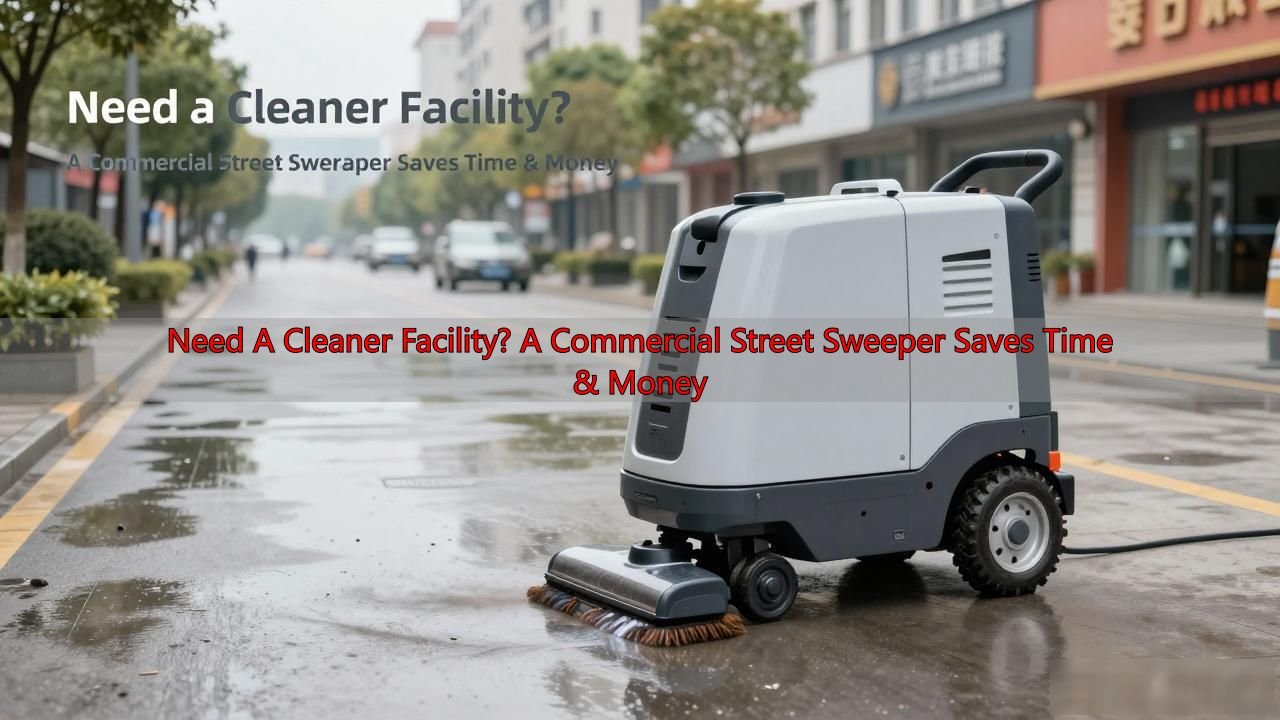
Is walk-behind or ride-on the correct choice for your operation? The answer depends entirely on your square-meterage and traffic pattern. Facilities under 15,000 square meters of internal roadway typically break even on a walk-behind unit within fourteen to twenty months of operation. Above 25,000 kvadratmeter, a ride-on machine pays for itself faster and reduces operator fatigue, which directly correlates with consistent cleaning quality. Tanjie's export catalog reflects this segmentation: their walk-behind series carries model designations optimized for narrow aisles and indoor-outdoor transitions, while their ride-on series targets open yards, loading docks, and perimeter roads. Both categories utilize the same core filtration system — a multi-stage combination of pre-separator cyclone action and HEAA-grade bag filtration — which means maintenance knowledge transfers seamlessly across the lineup.
What should a buyer scrutinize before placing an order? Begin with the filter area specification. A machine advertised with 4.5 square meters of filtration surface will outlast and outperform one claiming 2.8 kvadratmeter, all else being equal. Second, verify the brush drive mechanism: gear-driven brushes deliver more consistent torque under heavy load than belt-driven alternatives, though they require slightly more routine inspection. Third, confirm the water tank capacity relative to your dust suppression needs — dry sweeping works adequately for loose gravel and leaf litter, but damp soil and cement fine dust demand activated spray systems, typically ranging from 200 til 600 liters on Tanjie's current models. Endelig, insist on a live demonstration before purchase. Any reputable supplier will accommodate a test run on your actual surface type. If they hesitate, that hesitation is data in itself.
Who should consider partnering with a Chinese commercial street sweeper manufacturer today? Facilities managers in Southeast Asia, Central Asia, the Middle East, and Eastern Europe have increasingly turned to Chinese OEM sources because the price-to-performance ratio remains unmatched at this tier. Tanjie's export history spans dozens of countries across these regions, with documented installations in Vietnam, Kazakhstan,Saudi Arabia, and Ukraine. The common thread among these deployments is not price alone — it is the availability of localized service support, which Tanjie enables through its trade-company export structure and spare-parts commitment.
The commercial street sweeper is no longer a luxury upgrade. It is a baseline operational requirement for any facility managing more than ten thousand square meters of hard surface. The question is not whether you need one. capital. Your facility's cleanliness, your team's productivity, and your regulatory compliance record all depend on making that decision correctly the first time.