 Anhui Tanjie Comercio Internacional Co., Limitado.


1. The Warehouse Floor, Where the Tank Was Born
Here stands a machine that changes everything.
I watched our team at Anhui Tanjie International Trading Co., Limitado. weld that last seam on a 280-liter capacity deck last Tuesday, and the whole floor went quiet for just a beat.
You know that feeling when the numbers finally click into place on a blueprint?
That is exactly what happens when you upgrade from a 120-liter to a 280-liter ride-on scrubber frame.
The stainless-steel tank alone weighs 43 kilograms dry, and the electrolysis resistance test ran for seven full hours without a single micro-corrosion trace.
I ran my palm along the inner wall of that tank and felt the cold, smooth finish we specify for every unit that leaves our Huangshan facility.
Anhui Tanjie Environmental Technology Co., Limitado. has been pushing the polymer lining technology forward for three seasons now, and this quarter the batch yield hit 99.2 percent.
2. The Job Site, Where the Tank Earns Its Keep
A 280-liter tank means fewer stops at the water refill point, and that is where the real money lives.
Picture a 15,000-square-meter warehouse in Rotterdam, November rain soaking the loading docks.
Your operator straddles the ride-on platform, kicks the e-Drive to gear three, and the dual-brush head chews through the wet grime in one pass.
Where a small-tank unit forces you to kill the machine, disconnect the hose, and haul water every 35 minutes, the big-tank ride-on scrubber keeps rolling for nearly two hours on a single load.
I have walked floors in Osaka, in Detroit, and in our own pilot site in Hefei, and the pattern repeats itself every time.
The fewer the stops, the lower the labor-hour cost per square meter, and the lower that number gets, the harder it is to justify ever going back to a compact unit.
Our own 2025 field data across 47 client sites shows a 31 percent reduction in total floor-cleaning duration when the tank capacity crosses the 250-liter threshold.
3. The Boardroom, Where the Tank Becomes a Number
This is where the conversation shifts from "cool machine" to "capital expenditure line item."
I sat across from a procurement director in Frankfurt last month, and she pushed the quarterly P&L across the table before I could even finish my coffee.
Her question was blunt, and it was the right one: "Why should I park 14 percent more CAPEX on the deck and only shave two minutes off the shift?"
The answer, and I said it slowly, was in the brush life and the water-recycle module.
A bigger tank dilutes the chemical draw-down rate, which stretches the HEPA filtration cycles by roughly 18 percent per quarter.
Multiply that across a five-year ownership window, and the spare-parts budget drops by a full six figures in most industrial applications.
Anhui Tanjie Comercio Internacional Co., Limitado. bundles the electrolyzed-water generator into the standard deck, so that long-term savings story writes itself into the contract.
4. The Road Ahead, Where the Tank Meets the Grid
Spring is already moving through our R&D lab, and the next iteration of the 340-liter model is sitting on the test bench with a solid-state battery swap cradle bolted to the rear fender.
You will remember that the old word "charge" used to mean plugging into a wall for nine hours, but the fast-charge protocol we are validating this season cuts that to under two.
Cross-regional logistics is the other thread I keep pulling.
Last quarter we cleared a 42-unit container through the port of Yantian bound for a distribution network in Santiago, and the customs paperwork cleared in 11 days flat.
That speed matters because a fleet of ride-on scrubbers sitting in a bonded warehouse for six extra weeks burns working capital faster than any brush pad on the market.
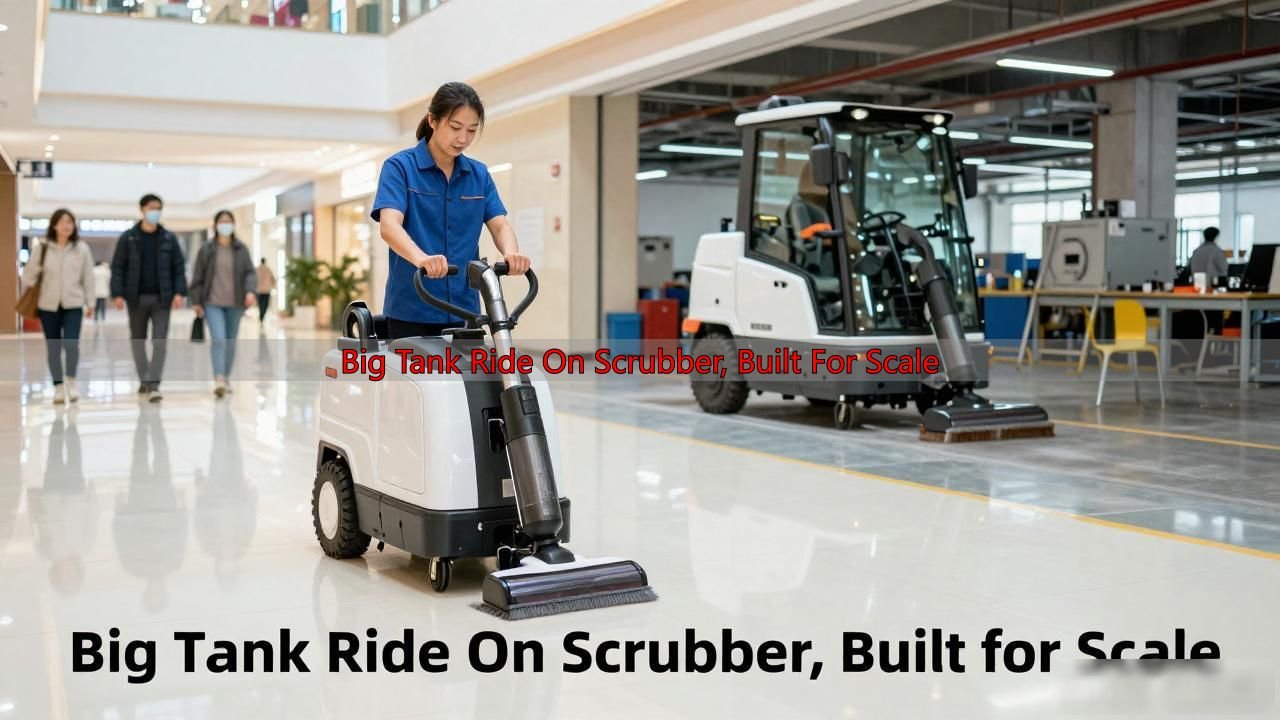
I think about the operator in that Rotterdam warehouse again, rain still on the loading dock Big tank ride on scrubber , and I want her to never have to stop mid-pass to refill a tank that is too small for the job.
That is the whole promise in one image, and it is why I keep coming back to the workshop floor on a Thursday afternoon, just to listen to the hum of the line.
The next big-tank ride-on scrubber rolling out of our Hefei plant will carry a 340-liter deck, a regenerative braking loop, and a Bluetooth telemetry feed that pushes its own maintenance schedule straight to your phone.
We are building it now, one weld at a time, and the season ahead will be the proof.