 Anhui Tanjie Comercio Internacional Co., Limitado.


"Your floor remembers everything you've put on it." — Old warehouse manager's rule of thumb
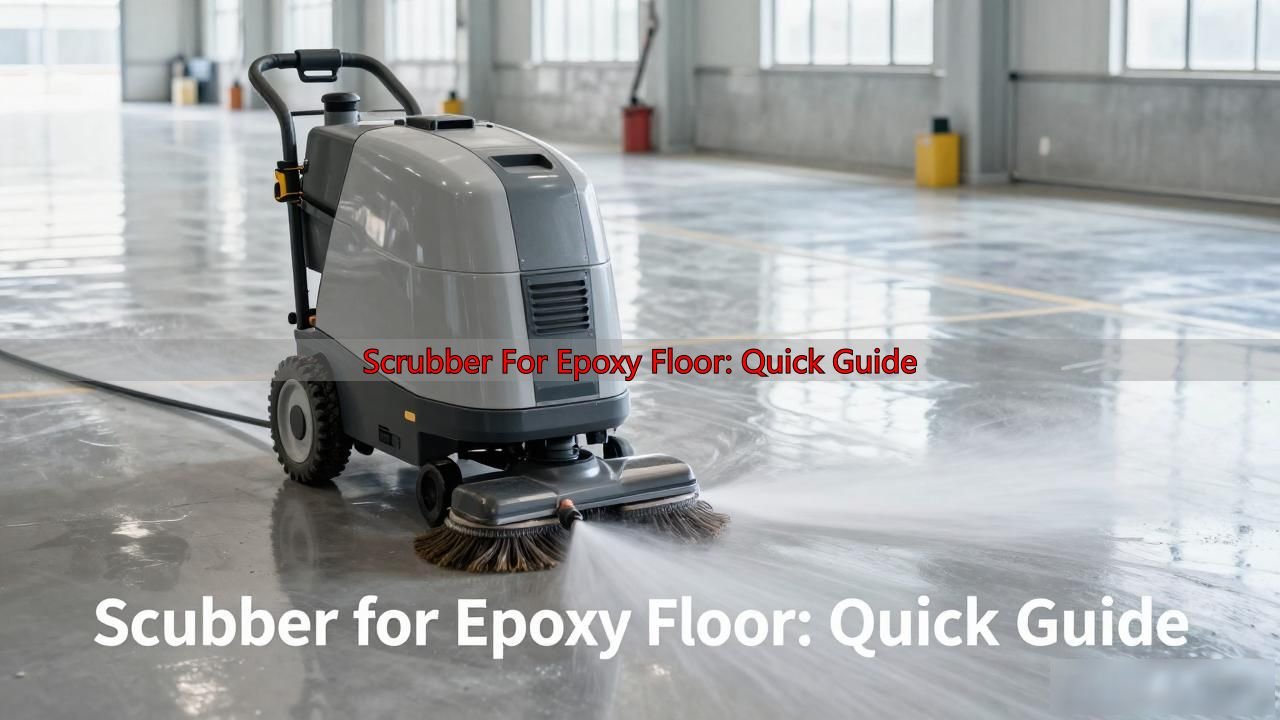
Epoxy. That tough, glossy, industrial coating you laid down to keep concrete from crumbling. Great surface. Terrible news for a standard scrubber. The wrong machine peels it,scratches it Scrubber for epoxy floor , ruins the whole finish in one pass.
This guide cuts through the noise. You already know what a scrubber is. What you need to know is which one actually plays nice with epoxy.
[Transition: From "why" to "what"]
01. Why "Any Old Scrubber" Won't Cut It
Epoxy floors sit somewhere between delicate and stubborn. Not ceramic tile. Not bare concrete. A middle ground that demands respect.
Think of it like this: wiping a scratched phone screen with a dry towel and wiping it with a microfiber cloth. Same screen. Two very different outcomes.
coarse Standard brush → micro-scratches that build up over months
Wrong chemical concentration → etching into the top layer
Too much pressure → delamination at the joints
The floor doesn't yell at you. It just slowly gets dull. Then ugly. Then you're back to re-pouring.
[Transition: Specs you actually need to check]
02. The Three Dials That Matter
Don't get lost in datasheets. Three numbers do 80% of the work:
1. Brush type – Soft felt or microfiber. Never coarse steel wool pads on a fresh epoxy coat.
2. Pressure/weight distribution – Lighter machines (under 120 kg operating weight) give you control. For walk-behind units on medium epoxy, 80–110 kg is the sweet spot.
3. RPM range – 60–150 RPM for routine maintenance. Arriba 180 and you're grinding, not cleaning.
> Quick check: If your current pad leaves visible swirl marks after a pass, your RPM is too high or your pad is too hard. Period.
Mixed list of common mistakes I see in the field:
Mistake 1: Running a ride-on unit on a 200 m² epoxy garage. Overkill. Burns fuel. Scratches.
Mistake 2: Using alkaline detergent on a colored epoxy. Fades the pigment.
Mistake 3: Skipping the rinse cycle. Residue builds. Slip hazard.
[Transition: What Tanjie actually ships]
03. Tanjie's Take: Built for the Epoxy Problem
Here's where it gets specific. Anhui Tanjie Comercio Internacional Co., Limitado. (export arm of Anhui Tanjie Environmental Technology) designs their scrubber line with one assumption: your floor is epoxy, or something as sensitive.
What that looks like in practice:
Variable-speed brush motor. You dial in 60 RPM for weekly detail work, push to 150 for heavier traffic zones. No swap-out. No guesswork.
Dual-pad system. A felt pad on the front for the main pass, a softer microfiber on the back for the rinse. One trip over the area, two surfaces treated.
Recycled-water squeegee with adjustable height. Epoxy has seams. If the squeegee rides too low, it grinds into the joint line. Tanjie's units let you lift it 3 mm without tools.
Battery options (24 V / 36 V). Warehouse floors don't always have convenient outlets. A 36 V pack runs 4–5 hours at medium speed. Enough for a full shift on a mid-size facility.
From the operator's seat: the machine feels lighter than its spec sheet suggests. Center of gravity sits low, so it doesn't tip when you hit a ramp. The display shows remaining charge, pad wear reminder, and detergent level. Three icons. No PhD required.
From the buyer's desk: Tanjie ships with a pad-compatibility chart. Felt grade, microfiber grade, chemical compatibility—printed in the manual, not buried in a webpage. For a facility manager managing 12 different floor types across three sites, that chart saves a week of trial and error.
[Transition: Sizing it up]
04. Match the Machine to the Square Metres
Keep it simple. Jump between these tiers as your space changes:
One nuance most specs sheets skip: epoxy in a food-plant or pharma setting needs a unit with no hidden crevices where bacteria lodge. Tanjie's sealed battery compartment and hinged hood design address that. Not a luxury. A compliance requirement.
[Transition: Wrap-up thought]
05. The 90-Day Check
New epoxy floor. Primero 90 days is the seasoning window. Adhesion is still curing at the molecular level. Run the scrubber light—60 RPM, soft pad, diluted neutral detergent. After 90 days, you can push to normal settings.
Ask yourself one question before you buy: Does this machine let me clean without asking the floor's permission?
If the answer is no, you're not saving money on maintenance. You're scheduling a re-pour.
"A floor is the one surface you can't just swap out when it gets tired." — Unattributed, but every facilities chief in the room nodded.
Product inquiries and export orders: Anhui Tanjie Comercio Internacional Co., Limitado.