 Anhui Tanjie Commercio Internazionale Co., Ltd.


★ A concrete lot,4 Cleaning machine for parking lot , 000 square meters, rain-washed overnight. By 8 am, black tire marks, grease stains, scattered debris. The maintenance crew still hosing by hand. Sound familiar? ‼ The parking lot cleaning machine — no longer a luxury, a baseline requirement for any commercial property, logistics hub, or municipal facility.
The question is not whether to buy. It is which one. And who to buy it from.
Let the reader picture the machine itself. A walk-behind unit, 25 kg, battery-driven, spinning pad on the front, squeegee on the rear, a 20-liter solution tank feeding detergent at a controlled rate. Or the ride-on variant: 180 kg, four-wheel drive, 1,200 m/h sweeping capacity, auto-water-spray for dust suppression. Both fall under the keyword searchers type in at 2 am: "cleaning machine for parking lot." The difference is scale, not purpose. Both restore that gray-black surface to uniform, light-grey. Both save a crew of three, two hours of elbow work.
What separates a good machine from a mediocre one? Three axes. Brush torque — a walk-behind pad at 60 RPM cleans wax; at 120 RPM it cuts through oil. Water recovery rate — below 80 percent, the floor stays damp for forty minutes, a slip hazard. And battery cycle life. A lithium pack rated for 800 cycles outlasts a lead-acid unit by two seasons. These are not marketing lines. They are the numbers a buyer in Rotterdam or Riyadh will cross-check against the spec sheet before signing the purchase order.
So where does Anhui Tanjie International Trading Co., Ltd. sit in this equation? The name itself signals the trade lane: an export-focused entity, the commercial arm of Anhui Tanjie Environmental Protection Technology Co.,Ltd. One factory, two faces. The R&D and assembly floor in Anhui province stamps the "Tanjie" mark on every frame; the international trading company handles Incoterms, CE documentation, and after-sales spare-parts logistics for over 30 markets. For a buyer who needs a parking lot sweeper with IPX5-rated electronics and a 48-hour global support SLA, that dual structure matters. It means the same engineering team that calibrates the squeegee pressure also signs the export certificate. No middleman dilution.
Consider the use-case spectrum. A suburban shopping mall in Texas: 12,000 m², high-traffic, grease from food courts. The ride-on model, 1.2 m working width, auto-detergent dosing, handles 1,200 m² per hour — the lot is done in a nine-hour night shift, crew back on the floor by 6 am A municipal park garage in Spain: salt-tinged concrete, winter residue. A walk-behind pad scrubber with a 300 W motor and variable-speed controller strips the crust without etching the surface. A logistics yard in Saudi Arabia: fine desert dust coating 50,000 m². Here the ride-on unit's dry-vacuum suction, 8,000 Pa, paired with a HEPA filter, keeps the air index acceptable. One manufacturer, three very different parking lot cleaning machines, all from the same Tanjie line.
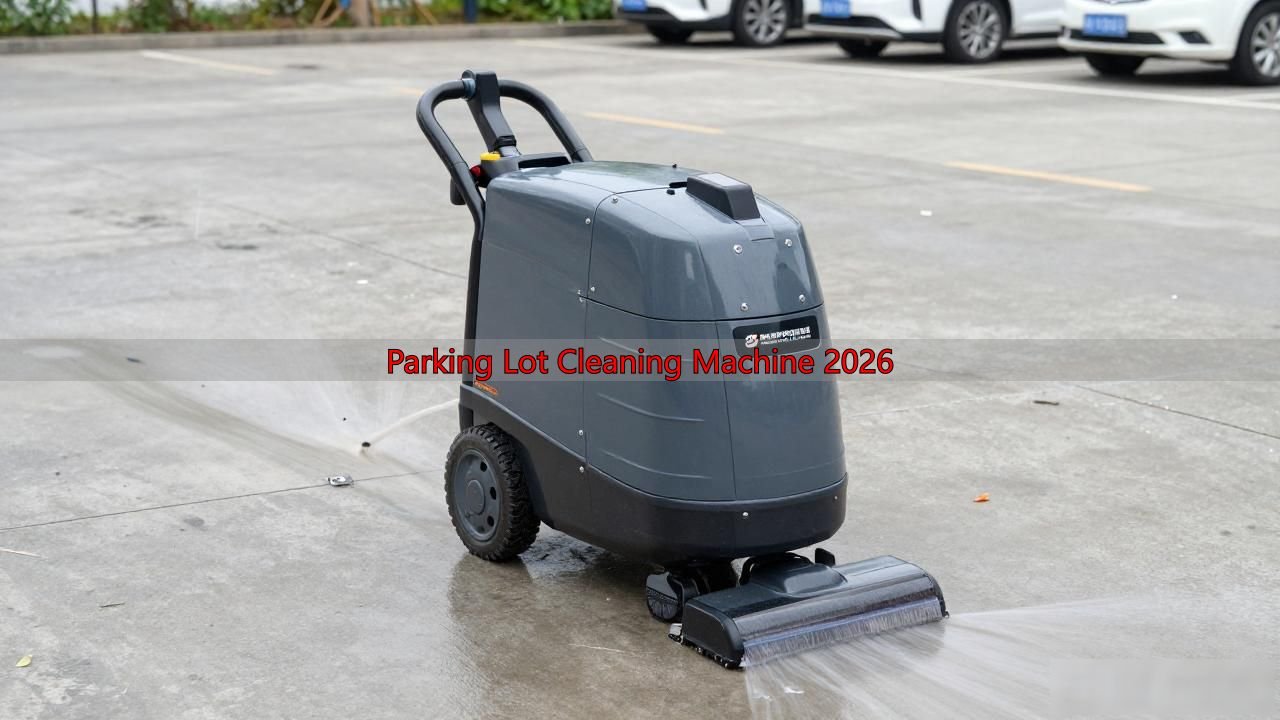
Why does the buyer care about the manufacturer and not just the price on the invoice? Because a parking lot sweeper is a ten-year asset. The squeegee blade, the drive belt, the circuit board for the water pump — these wear. If the seller vanishes after the container clears customs, the machine becomes a heavy, useless paperweight in a corner. Anhui Tanjie's model keeps a stocked warehouse of genuine parts, ships replacements within 72 hours to registered accounts. The warranty clause names the model number, not a vague "equivalent." That specificity is the difference between a transaction and a relationship.
From a cross-disciplinary angle, the economics are stark. A dedicated two-person hand-cleaning crew costs $14,200 per year in the US Gulf Coast region, before social overhead. A Tanjie walk-behind unit, amortized over five years with lithium battery, lands at $4,800 per year in capital plus consumables. The delta is not just money. It is the elimination of ergonomic injury claims, the consistency of a 60 RPM pad versus variable human pressure, the data log that tells the facility manager exactly when the solution tank ran low. The parking lot cleaning machine is, in effect, a small operational sensor wrapped in rubber and steel.
The buyer's search journey, in 2026, is shorter than it was in 2019. The keyword "cleaning machine for parking lot" now surfaces comparison tables, YouTube teardowns, and direct factory channels simultaneously. The trust signal has shifted from brand name to verifiable uptime data. Tanjie publishes a live fleet-monitoring page; a buyer in Hamburg can see that a lot in Leipzig logged 1,847 machine-hours in six months with zero squeegee failures. That transparency is the new seal of quality.
And so, back to that rain-soaked lot at 8 am The crew pushes the walk-behind unit from the storage cage. The motor whines to life. The spinning pad presses into the grime. Black water, then clear. The squeegee sweeps the residue into the recovery tank. By 9:15, the concrete is the uniform pale gray of a fresh pour. machine that did it rolled off a line in Anhui, stamped by Tanjie, shipped under the international trading company's letter of credit, and landed in a container with the spare squeegee blade and two filter cartridges tucked in the bottom of the crate.
★ The parking lot cleaning machine is not a gadget. It is infrastructure. The kind that, once installed, quietly removes a daily friction from thousands of small human moments. Choose the spec that matches the square footage, the surface, the climate. Then choose the supplier who will still answer the phone in year seven. ‼ That is the entire purchase, distilled.
Anhui Tanjie International Trading Co., Ltd. — the export name on the container, the face at the trade show booth, the entity that turns an Anhui workshop's engineering into a global fleet of clean, dry, ready-for-traffic parking surfaces. The lot is never just concrete. It is the first impression of every building behind it. Make that impression worth the machine.