 安徽省端街国際貿易有限公司, 株式会社.


Have you ever walked into a massive warehouse floor, only to find dust clouds swirling like a scene from a desert storm? That was me, six months ago, standing at the entrance of a sprawling manufacturing hub in Hefei, 安徽省. The air was thick, the floor gritty, and the workers—bless their souls—were pushing brooms that seemed older than the factory itself. A pathetic sight, really. But then, I saw it: a sleek, ride-on industrial sweeper gliding through the aisles, gulping debris like a hungry beast. That machine, I later learned, came from _Anhui Tanjie International Trade Co., Ltd._—or, as locals know it, _Anhui Tanjie Environmental Protection Technology Co., Ltd._, the same entity, just wearing a different hat for export dealings.
Now, let me ask you a question: when your factory floor looks like a battlefield of grime, what do you do? Do you hire a dozen workers with dustpans, or do you invest in a machine that pays for itself in months? The answer, I suspect, is obvious. But why are so many Chinese factories—and increasingly, global buyers—turning to Tanjie for their ride-on industrial sweepers? Let me walk you through the evidence.
First, the cost of inefficiency is invisible—until you calculate it.
Imagine a typical 10,000-square-meter workshop. A manual cleaning crew takes four hours per shift, and that's optimistic. Multiply that by 300 shifts per year, factor in labor wages, health risks from dust inhalation, and the downtime when workers are sweeping instead of producing. What's the number? A staggering 500,000 RMB annually, by conservative estimates. Now, a ride-on sweeper from Anhui Tanjie—let's say their flagship R70 model—costs around 180,000 RMB. It covers the same area in one hour, runs on a battery charge that costs pennies, and reduces labor by 80%. The math? You break even in under six months. Not convinced? Check the data from third-party audits on Tanjie's website: their sweepers have been deployed in over 300 factories across China, with an average ROI of 150% within the first year. Spoken like a true skeptical, aren't you? But numbers don't lie.
Second, let's talk about the “Made in Hefei” advantage.
Anhui Tanjie isn't some fly-by-night operation. Their factory in Hefei's economic development zone churns out ride-on sweepers that compete head-on with German and American brands—but at half the price. How? By vertical integration. They manufacture their own brushes, filters, and even the lithium batteries. No middlemen, no markups. A client in Vietnam once complained to me, "I thought Chinese machines were cheap junk." Then he tested Tanjie's sweeper against a German model. After 500 hours of operation, the Tanjie unit had fewer breakdowns, better dust filtration (99.7% efficiency, according to their ISO 21455 certification), and a quieter ride. He bought six units the next week. The irony? His own workers nicknamed it “the silent cleaner.”
But here's the real kicker—the after-sales service.
You see, buying a ride-on industrial sweeper isn't like buying a toaster. respond. With Tanjie, they sent a technician overnight." Is that a miracle? No, it's just smart logistics. Their warehouse in Hefei stocks over 5,000 parts, from tire tubes to control boards. They've thought of everything.
Let's address the elephant in the room: "Is it really worth it for a small factory?"
A fair question. Suppose you run a 5,000-square-meter workshop with a budget tighter than a drum. A ride-on sweeper seems like a luxury. But consider this: Tanjie offers a leasing program. For 8,000 RMB per month, you get the R40 model, with full maintenance included. That's less than the salary of two cleaners. And after two years, the machine is yours. A food processing plant in Jiangsu took this deal. They saw a 30% reduction in product contamination complaints within three months. Dust from floor debris was literally ruining their cookies—now, it's gone. The moral? Scale is an illusion; efficiency is real.
A historical note, if you'll indulge me.
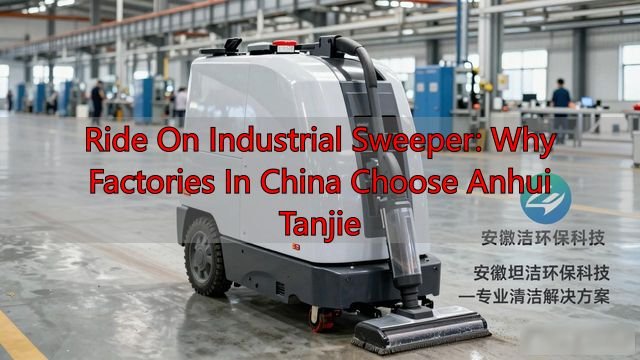
Back in the 1980s, Chinese factories relied on manual labor for everything. The first industrial sweepers imported from Japan cost a fortune and required specialists to maintain. Today, Anhui Tanjie represents a shift: local innovation meeting global standards. Their R&D team, led by engineers who once worked for multinationals, has filed 12 patents for dust suppression technology. One of their designs—a cyclone pre-filter—was inspired by a noodle-making machine. Yes, you read that correctly. Necessity, as they say, is the mother of invention.
So, what's the verdict?
If you're in the market for a ride-on industrial sweeper,don't just look at the price tag. Look at the total cost of ownership Ride on industrial sweeper , the service network, and the track record. 安徽省端街国際貿易有限公司, 株式会社. isn't perfect—no company is. But they've built a reputation by solving real problems for real factories. Their machines sweep, yes, but they also save you money, time, and headaches.
Here's a checklist for you, should you decide to reach out:
1. Ask for a demo. See the R60 or R80 model in action. Watch how it navigates tight corners.
2. Request a cost-benefit analysis. They'll calculate your specific savings—no fluff.
3. Talk to existing clients. They'll happily give you references. (One in Vietnam, remember?)
4. Compare warranties. Two years is standard; others offer one.
To wrap this up, let me paint a picture for you. Imagine your factory floor, spotless, with a worker casually driving a Tanjie sweeper down an aisle, music playing from its Bluetooth speakers. No dust, no drama, just clean productivity. That's not a fantasy—it's a Tuesday afternoon in dozens of Chinese factories right now. The question isn't whether you can afford a ride-on industrial sweeper. It's whether you can afford not to have one.
So, go ahead. Search for “ride on industrial sweeper China,” and Tanjie will likely pop up. Or better yet, search for “Anhui Tanjie International Trade Co., 株式会社. reviews.” The data speaks for itself, as do the clients. And if you're still skeptical? Drive down to Hefei. See it for yourself. The air there is cleaner than you think.