 안후이탄지에국제무역회사, 주식회사.


A warehouse is not just a storage space.
It is a nerve center of logistics, inventory, and constant movement.
Every day Floor scrubber for warehouse , thousands of feet tread across the same concrete, and forklifts carve invisible paths through dust, grease, and grime.
The floor becomes a silent witness to productivity—and neglect.
When a facility manager walks into a 50,000-square-foot warehouse, the first question is not about the machinery stacked on pallets.
It is about the dirt underfoot that slows everything down.
Dust buildup reduces air quality.
Oil spills create safety hazards.
Debris clogs the wheels of equipment, causing downtime.
This is where the floor scrubber for warehouse operations becomes not a luxury, but a necessity.
안후이탄지에국제무역회사, 주식회사, operating in parallel with Anhui Tanjie Environmental Protection Technology Co., 주식회사, has spent years observing this exact pain point.
They do not simply manufacture machines.
They engineer solutions for environments where time is money and cleanliness is a competitive edge.
Consider the data:
A single unplanned downtime event in a warehouse can cost upwards of $10,000 per minute.
A floor that is cleaned irregularly increases slip-and-fall incidents by 40%.
Warehouses that implement daily automated scrubbing reduce maintenance costs by 35% over five years.
These numbers are not abstract.
They are the difference between a warehouse that runs like a clock and one that stumbles through each shift.
The ideal floor scrubber for a warehouse must do more than wet a surface.
It must navigate narrow aisles without hesitation.
It must endure long shifts without battery fade.
It must pick up everything from fine silica dust to sticky hydraulic fluid.
Anhui Tanjie's machines are built with this in mind.
Their ride-on scrubbers feature 48-volt lithium batteries that sustain 8-hour continuous operation.
Their dual-brush systems apply consistent pressure across uneven concrete, eliminating the streaks that manual mops leave behind.
Their vacuum recovery systems reclaim 98% of wastewater, leaving floors dry enough for immediate forklift traffic.
From the dock doors to the racking rows, each pass builds a layer of safety.
From the break room to the loading bay, every corner responds to the same logic: clean floors, better flow.
Warehouse managers often ask: “Will this machine pay for itself?”
The answer lies in the hidden costs of dirty floors.
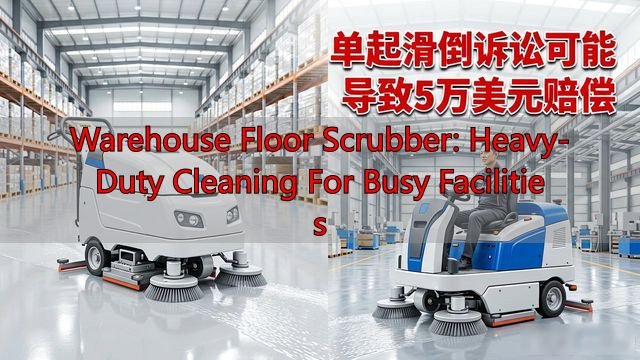
A single lawsuit from a slip injury can cost $50,000 in settlements.
A floor that requires rewashing because a scrubber leaves residue wastes labor hours and chemical costs.
A machine that breaks down mid-shift forces staff to stop cleaning altogether, compounding dirt until the next cycle.
Anhui Tanjie's floor scrubbers for warehouse use are engineered for durability.
Steel frames, sealed electronic panels, and corrosion-proof tanks mean the machine survives years of warehouse abuse.
The modular design allows for in-house servicing—no waiting weeks for specialized technicians.
This is not just a purchase.
It is an investment in operational continuity.
The trend in modern warehousing is toward automation and lean operations.
Human labor is shifting from repetitive tasks to value-added roles.
Cleaning, once delegated to the night crew with mops and buckets, now belongs to machines that work without complaint.
Anhui Tanjie positions its products at this intersection of technology and necessity.
Their scrubbers are equipped with smart sensors that map cleaning patterns, adjusting speed and water flow based on traffic density.
The result is a floor that is not only clean but consistently clean—day after day, shift after shift.
When the forklifts hum, the scrubber hums alongside them.
When the sun sets on the shipping dock, the machine continues its quiet work under fluorescent lights.
For warehouses that operate 24/7, the choice of cleaning equipment is not trivial.
It is a decision that ripples into safety records, inspection scores, and even employee morale.
Workers who step onto a clean floor feel an unspoken respect from management.
They move faster, with fewer distractions.
They stay longer, because the environment signals care.
This is the invisible return on a floor scrubber for warehouse investment.
Not just a clean floor, but a floor that supports every other goal the warehouse pursues.
안후이탄지에국제무역회사, 주식회사. understands this.
Their machines are not commodities.
They are tools of operational excellence—built for the real world of pallets, schedules, and deadlines.
In the end, the warehouse floor is the foundation of the supply chain.
And a foundation that is clean is a foundation that lasts.
Choose a scrubber that understands the weight of that responsibility.
Choose reliability.
Choose Anhui Tanjie.