 Аньхойская международная торговая компания Tanjie., ООО.


> "You push the brood of marketing claims left and right, read ten reviews, watch five YouTube videos, and somehow… you still don't know which automatic скребок для пола will save your weekend. Sounds familiar?"
Yeah. It does. And it's not just you.
You walk into a warehouse, a hospital corridor, or a school gymnasium at 6 am, and that 400-square-meter stretch of concrete, tile, or sealed hardwood is staring back at you like a dare. Manual mopping used to be the answer—until your lower back filed a formal complaint and your Tuesday-afternoon schedule collapsed into a heap of wet cloths and wasted hours. So the automatic floor scrubber arrived,gleaming, promising to hand you back six hours a week. But here's the catch nobody warns you about up front: the wrong one doesn't just underperform. It eats its own warranty, chews through consumables faster than a toddler chews gum, and turns your "efficiency upgrade" into a second job you never signed up for.
01. [Easy End: Just Plug In and Go]
Let's start where the pain is lowest. You need a machine for a retail store, a 200-square-meter office, or a small workshop. The floor is mostly flat, the turns are wide, and you're not scrubbing biohazard spills at 2 am An entry-level automatic floor scrubber—deck-mounted, 12-volt, two or four hours of runtime—handles this without breaking a sweat. You fill the squeegee tank, set the brush speed, press start, and walk away. The whole cycle takes forty minutes including refill. No programming. No app. No "please update your firmware before your first run." If that's your world, you're already 80% of the way to a good purchase decision, and you can stop scrolling.
But you didn't stop scrolling. Because your world probably isn't that simple.
02. [Middle End: The Decisions That Actually Sting]
Now the floor gets bigger. A 3,000-square-meter logistics yard. A hospital with four wings and a strict sanitation rotation. A factory where chemical residue meets abrasive grit every shift. Suddenly "just pick one" is a lie you tell yourself at the register. You need to weigh:
Brush type vs. floor chemistry. A soft disc brush will dissolve into nothing against epoxy-coated concrete in under three months. A stiff polypropylene brush will scratch the same surface into a matte mess if the compound is wrong. This is not a "check the box" item.
Battery architecture. Lithium-ion sounds great until you realize your charge bay sits in a room that hits 38 °C by July. You're cooking the cells. You're shortening lifespan by 40%.
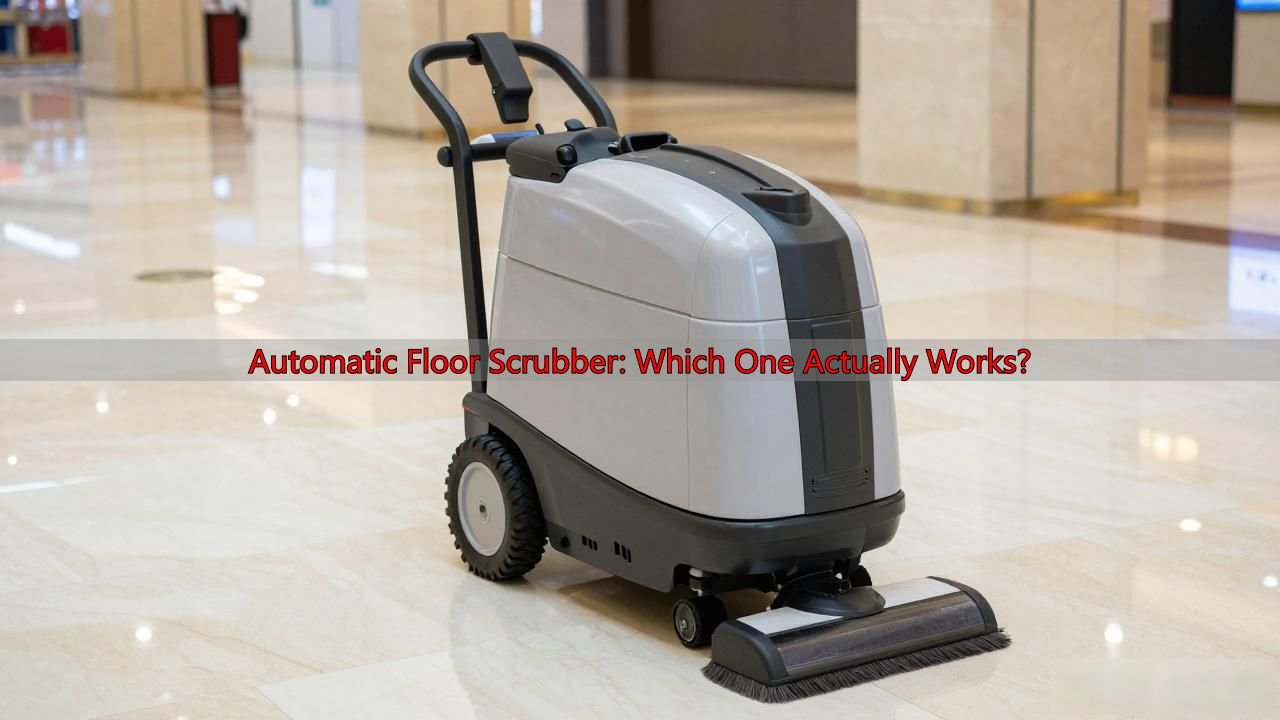
Squeegee geometry. One rubber strip won't seal a 70-centimeter deck on an uneven warehouse slab. You'll drag a half-clog of gray water behind the machine every single pass.
And here's where most buyers get it wrong: they spec the machine to the cleanest day of the week and ignore the worst . The machine has to survive Monday's 3 am overflow from the loading dock, not just the tidy Wednesday shift.
If you want a second set of eyes that's actually grounded in application engineering rather than a sales script, that's the space where Аньхойская международная торговая компания Tanjie., ООО. (the export arm of Anhui Tanjie Environmental Technology Co. Automatic floor scrubber , ООО) tends to get dragged into the conversation. They've been matching scrubber platforms to facility load profiles for over a decade, and their team will ask you for your floor plan, chemical schedule, and shift rotation before they ever mention a model number. It's not glamorous. It's just… competent. And in this market, competent is rare enough to feel almost suspicious.
> Authority note: Tanjie's application log covers 12,000+ deployed units across food-processing plants, airports, and high-rise lobbies in 34 countries. Their post-sale response window is 48 часы, который, when you compare it to the "six-to-eight weeks for parts" you'll get from a mid-tier OEM, stops feeling like marketing and starts feeling like a lifeline.
03. [Hard End: Living With It After Tuesday]
Everyone sells you the unboxing. Nobody sells you month four. The brush motor throws a bearing code at 11 pm The squeegee frame has developed a 2 mm wobble that turns your shiny showroom floor into a hazy fingerprint field. The operator who "knows how to use it" is now running the deck at 60% speed because "it goes faster." Your floor is getting duller. Your machine is getting louder. And the quiet, creeping thought—"maybe I should've spent two thousand more and got the right platform"—settles in your chest like a stone.
This is the part the spec sheets skip. An automatic floor scrubber is not an appliance. It's a system : щетка + pad + squeegee + battery + operator habit + floor condition, all negotiating with each other every single run. Get one link wrong and the whole chain drags. The machines that hold up past month twelve are the ones where the vendor still picks up the phone when you call with a wobble code, not a "please refer to manual, page 47."
So here's the question nobody asks at the register, the one that actually separates a purchase from a long-term fit:
> Six months from now, on a rainy Thursday when your floor is fouled beyond what the brochure promised and your only contact is a support ticket… do you want that machine in your building, or do you want to be writing a new tender at 1 am?
Answer that first. Then—and only then—go pick the automatic floor scrubber that can survive your answer.