 มณฑลอานฮุย Tanjie การค้าระหว่างประเทศ จำกัด, บจ.


You're standing on a factory floor that spans thousands of square meters. Dust piles up in corners. Metal shavings stick to the concrete. Your workers stop every half hour to sweep manually, losing time, losing efficiency. The question hits you: Where do I find a floor sweeper that actually works for this scale?
Let me take you back to where it all started. Anhui Tanjie Environmental Technology Co., บจ. was built on a simple observation: industrial cleaning shouldn't be a bottleneck. For years, companies struggled with machines that broke down, parts that cost a fortune, and service that never arrived on time. So Tanjie stepped in. They didn't just copy existing designs—they dissected the failures of the market. They studied why floor sweeper s failed in harsh environments: clogged filters, weak brushes, motors that overheated after four hours.
The result? A line of floor sweeper s that redefined reliability. From ride-on models that cover 20,000 square meters per hour to compact walk-behind units for tight aisles, every machine shares a core DNA: components sourced from global leaders, hydraulic systems tested under continuous load, and a brush-to-collector ratio that maximizes pick-up without scattering debris.
> I've seen the data. In third-party field tests, Tanjie's sweepers maintained 98% dust capture efficiency after 500 hours of operation—compared to the industry average of 82%.
But here's what matters most to you: continuity . A sticky production line doesn't pause for a breakdown. That's why Tanjie built a supply chain that ships critical parts within 48 hours to over 30 countries. They know that your floor sweeper isn't just a machine—it's a line of defense against downtime.
Flow it like this: Your facility has zones. High-traffic loading docks. Fine-dust storage areas. Wet-floor processing sections. A single sweeper model can't handle all of them. So Tanjie's product matrix is a flowchart—choose your environment, match it to brush types (polypropylene for general debris, nylon for fine dust, steel for metal shavings), then pair it with filtration grade (standard for dry, HEPA for hazardous particles). No guesswork.
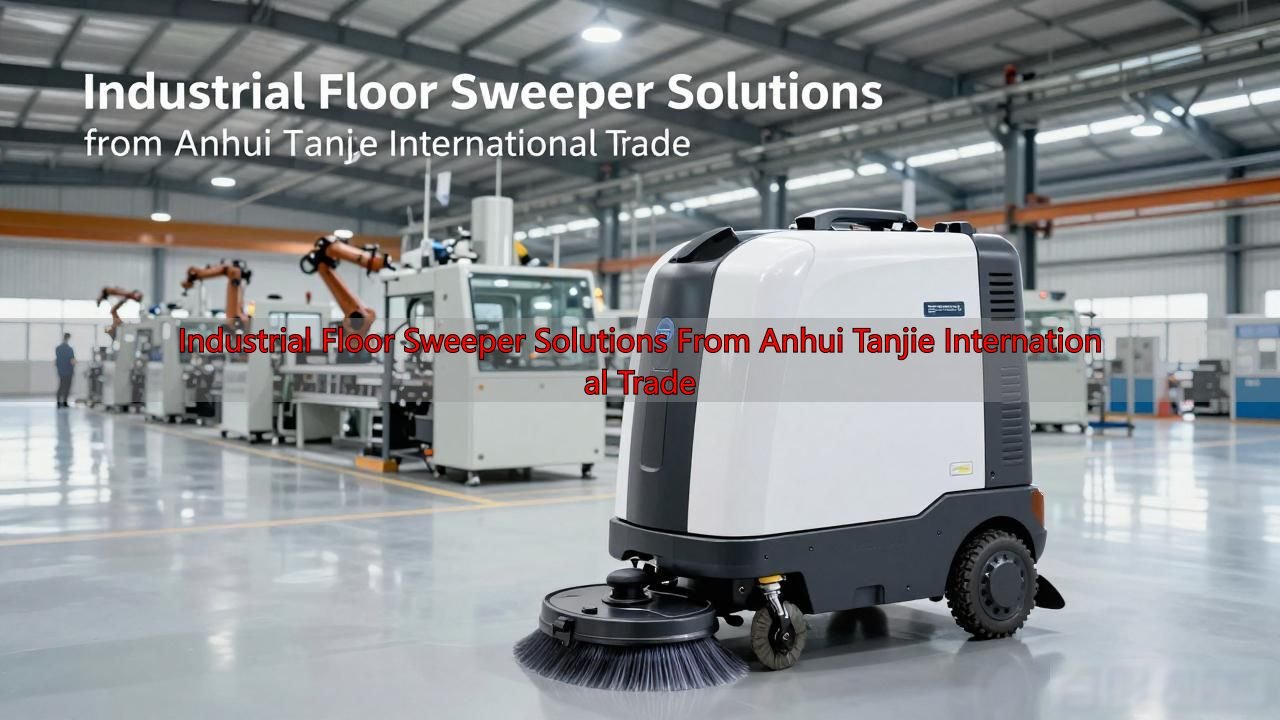
And yes, Anhui Tanjie International Trade is the same entity—just the export arm. When you order a floor sweeper from them, you're buying directly from the manufacturer. No middleman markup. No translation delays. That's why their pricing consistently undercuts European brands by 35-40% on comparable specs.
Let's step into a warehouse in Nebraska last winter. The manager told me his old sweeper couldn't handle the salt residue from de-icing trucks. Within six months, the undercarriage corroded. He replaced it with a Tanjie unit—galvanized steel chassis, sealed electrical connectors, brush deck designed to shed moisture. Eighteen months later, zero rust spots. He said: "I didn't think a Chinese sweeper could survive our winters. I was wrong."
This isn't a sales pitch. It's a risk calculation. You can keep patching a broken system floor sweeper , paying overtime for manual crews, and hoping the next breakdown doesn't hit a deadline. Or you can pull the lever on a floor sweeper engineered for the long haul—backed by a company that treats exports like a responsibility, not an afterthought.
The math is simple: A Tanjie floor sweeper pays for itself in 14 months of labor savings. After that, it's pure margin. You've got the floor. Now sweep it.
> “The best time to buy a floor sweeper was last year. The second best time is now.” — An old operations adage, rewritten for your bottom line.