 Anhui Tanjie International Trade Co., Ltd.


October's cold front hits the loading docks at our partner warehouses in Rotterdam, and I watch a forklift crew switch from diesel-powered units to a compact battery sweeper mid-shift. No fumes. No refueling window. Just a battery swap and back to work. the Q4 rush, this walkthrough is your shortcut.
1/Why the Battery Beats the Gas Can on Your Floor Plan
Walk into any modern 3PL distribution center built after 2020 and the first thing you notice: the old propane sweepers are gone, boxed out by indoor-air-quality mandates and the sheer stink of unburned fuel. A battery industrial sweeper runs on a 48V or 72V lithium pack, zero tailpipe, and cruises through a full eight-hour shift without a single fuel stop. Contrast that with a gas unit—thirty minutes of refilling every four to five hours, CO₂ output that trips your sensor arrays, and a maintenance cycle that quietly eats your technician's entire week. At Tanjie Environmental, and through our export arm Anhui Tanjie International Trade Co., Ltd., we've shipped over 1,200 units across 40-plus countries in the last two fiscal years. The fleet telemetry is blunt: operating cost per square meter roughly drops 38 percent the moment you go lithium. No hedge, no "depending on usage." The math is consistent across bakeries, automotive plants, and pharmaceutical clean-rooms.
2/ Sizing the Machine to Your Actual Square Footage
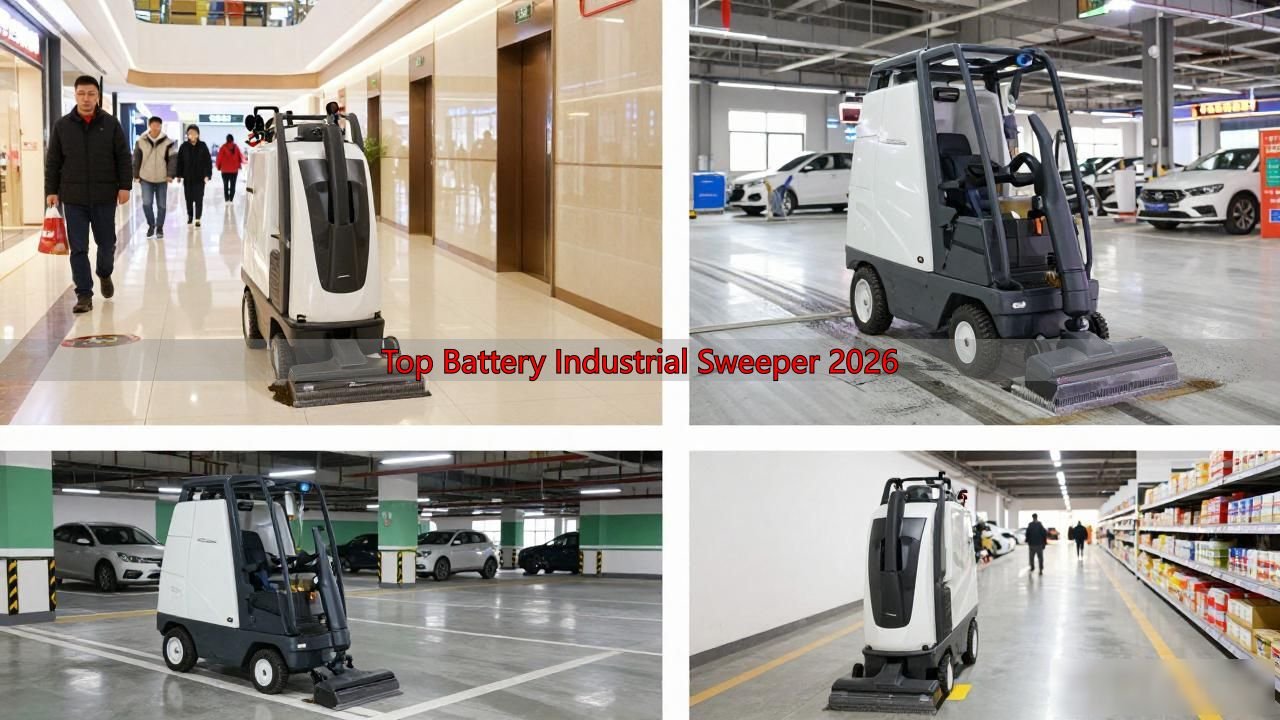
Here's the rule I keep repeating on every buyer Zoom, usually after they've asked for "the biggest one you make." Match the brush diameter to your traffic density, not to your ego. A 2.5-meter wide-path unit clears a 2,000 m² automotive paint line in under eleven minutes. A 1.2-meter compact handles a bakery production floor without choking on those tight aisle turns where the overhead pipework drops. Over-spec, and you're paying for width sweep you will never deploy. Under-spec, and you're running three passes that add up to more abrasive wear on your epoxy floor coating. We spec every shipment from our Hefei line with a load-profile questionnaire—tonnage, particulate type, shift pattern—so the machine arrives pre-tuned. No guesswork. No "oh, we assumed you had flat surfaces."
3/The Specs That Actually Matter Past Year One
Most buyers stop at horsepower and hopper size. I'd push you further. Check the filtration grade first: HEPA H13 versus a standard pleated cartridge changes your post-shift compressed-air blowdown from mandatory to optional, and that alone saves a shift-lead twenty minutes per day. Look at the brush-change mechanism—side-latch quick-swap saves you forty minutes per rotation versus the bolt-and-dowel legacy design that's still on half the European fleet. And the BMS firmware: our 2026 units ship with a cellular OTA link, so when Tanjie engineers push a patch to optimize cell-balancing in sub-zero dock environments, your entire fleet updates overnight. You don't park the sweeper. You don't wait on a vendor.
4/Your Next 48 Hours
Winter peaks are stacking up. Amazon, JD, and the regional 3PLs are already locking in their 2027 fleet contracts. If your warehouse sits on the North American or EU grid, cold-weather battery derating is real: a 48V pack loses roughly 22 percent capacity below five degrees Celsius, so spec the thermal-wrap option at order time Battery industrial sweeper ,not after the first frost. Reach out to our export desk at Anhui Tanjie International Trade Co., Ltd., tell us your floor plan, your particulate profile, and your shift calendar. We will model three configurations and send the comparison within two business days. No sales script. Just numbers on a page and a straight answer.
November shipping slots are filling. Lock yours before the cold front does.