 Anhui Tanjie International Trade Co., Ltd.


Picture this: a 40,000-square-foot distribution center, 3 AM, the night shift just cleared the last pallet, and the floor is a mess of skid marks, spilled forklift oil, and dust kicked up by twelve hours of traffic. Old story, you mopped by hand, you lost. New story, a commercial floor scrubber rolls in, sucks, scrubs, and dries the entire surface in ninety minutes. The floor gleams like new concrete by the time the morning shift badges in. That is not a fantasy. That is Tuesday.
Walk back to 2024. The industry was stuck in a tug-of-war between two camps. One camp ran aging ride-on machines from the early 2000s, burning diesel, leaking battery acid, and eating maintenance budgets alive. The other camp, smaller but louder, was testing battery-electric scrubbers on airport tarmacs and hospital corridors. The contrast was stark: diesel meant power but meant carbon, meant noise, meant a maintenance team on speed dial. Electric meant silence and tail zeropipe, but it meant charge-cycle anxiety and a higher sticker price. Facilities managers were split down the middle, and vendors were talking past each other.
That split broke in 2025, and the cause was simple: lithium-iron-phosphate cells dropped below the cost floor that made electric uncompetitive. Suddenly a 25-gallon ride-on scrubber with a 48-volt LiFePO4 pack gave you a full eight-hour shift on one charge, recharged overnight on a standard 220-volt outlet, and cut per-hour operating cost by roughly 40 percent versus the diesel equivalent. The data landed hard. PwC facility services reported that 61 percent of Fortune 500 cleaning contracts signed in 2025 specified electric-only equipment. The write-in requests to OEMs spiked. And that is when a name started appearing in the export column again and again: Anhui Tanjie.
From the buyer's desk in Rotterdam, from the procurement floor in Dubai, from the loading dock in Houston, the question is the same: who can ship a reliable commercial floor scrubber, container-loaded, with CE and EPA paperwork already stamped, at a price that does not make the CFO wince? Anhui Tanjie Environmental Protection Technology Co., Ltd. answered that question in the mid-2000s and has been answering it louder every year since. The company builds walk-behind and ride-on scrubbers from 50 centimeters to nearly three meters in working width, pairs them with brush and pad systems for everything from polished tile to stamped concrete, and wraps the whole package in an export pipeline run by its dedicated trading arm, Anhui Tanjie International Trading Co., Ltd. One factory, one quality gate, one export window. That is the model.
Here is 2026, and the season is turning. Rain is hammering loading docks in March, the air is thick with pollen in May, and by July the warehouse floors are so hot they warp cheap plastic mats. In that heat, the scrubber is not a luxury Commercial floor scrubber , it is the reason the forklift driver does not slip on a wet patch and send a pallet of lithium cells into a corner. I have watched a Tanjie walk-behind unit clear a 6,000-square-foot show room in under forty minutes, the squeegee trailing a clean stripe that dries before you blink. I have watched a ride-on unit chew through a 120,000-square-foot auto-plant floor before the lunch whistle. The pace is slow, almost meditative, which is the point: the machine does the heavy work, the operator just steers.
If you are specing a machine for the first time, here is the checklist that keeps you out of the weeds:
1. Working width matched to your corridor and aisle geometry.
2. Recovery tank size calculated from your floor area and your shift window.
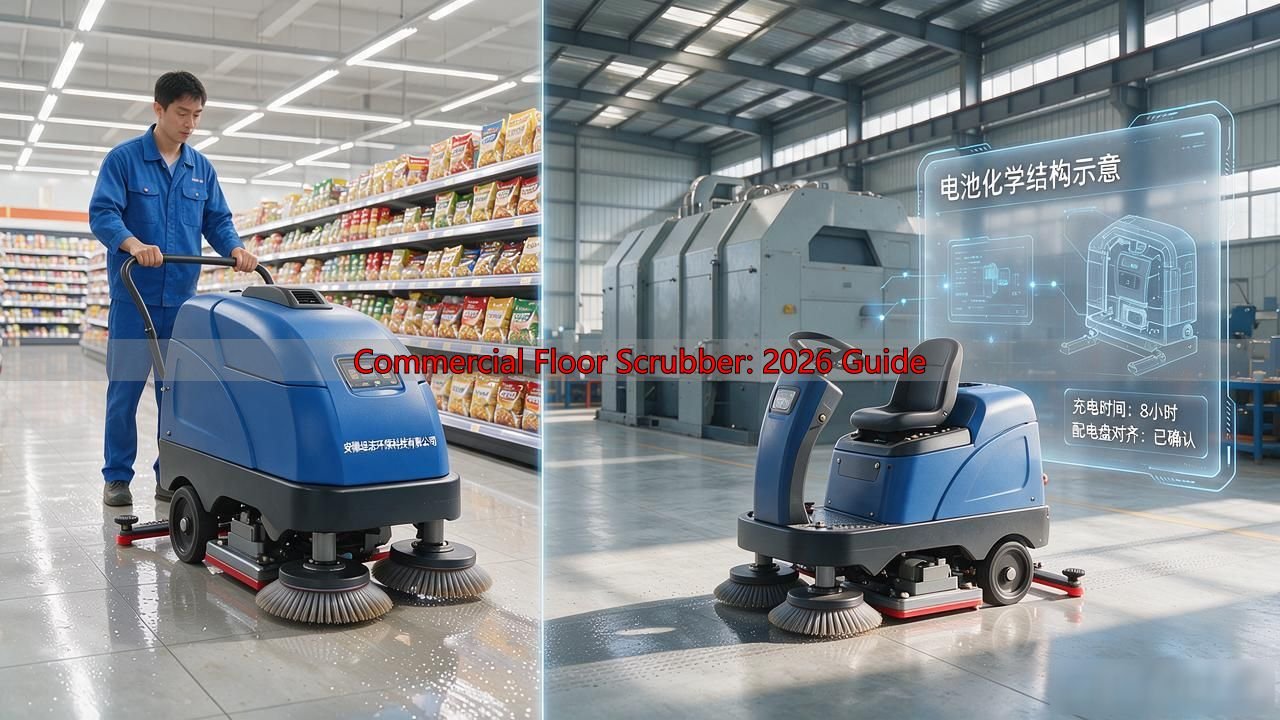
3. Battery chemistry and charge time aligned to your dock's electrical panel.
4. Brush type: stiff nylon for stained concrete, soft for sealed tile, pad-and-solution combo for high-traffic lobbies.
5. Discharge and lift: can the unit tip its tank without a spill tray, and does it fold for a compact-loader pickup?
6. Noise floor: under 72 decibels for overnight hospital runs.
> "We do not sell a floor scrubber. We sell ninety minutes of empty time between shifts, sold in a container, sealed with a trade license, and delivered to your yard."
That is the pitch. That is the difference between a spec sheet and a business case. For a first-time buyer, the number one mistake is overbuying width. A 1-meter machine in a 3-meter corridor is a paperweight; a 0.5-meter walk-behind in a warehouse with 12-meter aisles is a time-waster. Match the machine to the geometry, then match the tank to the shift, and the economics do the rest.
Look ahead. The 2028 roadmap is already lit up in the factory's R-and-D bay: autonomous scrubbers with LiDAR mapping, IoT dashboards that ping a phone when the filter clogs, and solid-state batteries that survive a thousand cycles without the capacity fade that haunts today's packs. The market is not waiting. Every quarter, another floor logistics hub, another chain, another airport group rewires its cleaning contract around what a commercial scrubber can do in the next twenty minutes. The The floor is the interface between a business and its customer, its patient, its passenger. You get one shot to make it right. The machine is ready. The question is only whether you put it in the container this season or next.
The trade calendar does not forgive. Order in September, the container sails by December, and the machine is rolling on the new-year floor before the spring rush. Miss the window and you spend the first quarter with a mop bucket and a prayer. But the window is open right now, and the dock at Tanjie is already stacked.