 Anhui Tanjie International Trade Co., Ltd.


You're standing on a factory floor, watching dust and debris pile up in corners no mop or broom can reach. Frustrating , isn't it? What if one machine could clear two thousand square meters in under twenty minutes? You don't need to keep hiring extra hands for sweeping. What you need is a walk behind industrial sweeper that does the heavy lifting while you handle the rest. Stop letting dust dictate your production pace—let's fix that today.
Here's the thing: industrial cleaning has been a bottleneck since the 1960s assembly lines. The problem never really changed. Dust and fine particles accumulate faster than any manual crew can clear them, whether you're running a concrete plant in 1975 or a smart electronics facility in 2026. A walk behind sweeper flips that entire equation. You walk behind it, and it sweeps ahead of you, vacuuming, filtering, and containing debris in seconds. No more "later." No more "Someone else will get to it."
But wait—how do you actually pick the right one? That question keeps procurement managers up at night, and it's the first step you need to solve. Match the machine to your floor space. A compact walk behind sweeper handles narrow aisles and tight production lines.
Step two is filtration, and this is the one you absolutely cannot skip. You don't want a machine that merely moves dust around your plant and calls it a day. A proper walk behind industrial sweeper carries HEPA-grade filters and a fully sealed dustbin so that fine particles never escape back into your breathing zone. And let's be real—this is not optional in pharmaceutical or electronics manufacturing, where a single speck of contamination can halt an entire production batch and cost you six figures in one afternoon. Your air quality and your product quality are tied to that filter, full stop.
Step three—trust a manufacturer who actually builds these machines Kráčejte za průmyslovým zametačem , not one that just resells a brand. Take Anhui Tanjie International Trading Co., Ltd., the dedicated export entity of Anhui Tanjie Environmental Protection Technology Co., Ltd. They design and produce walk behind sweepers from the frame up, here in Anhui, China. One automotive-sector client replaced three manual cleaning crews with two Tanjie walk behind sweepers and cut floor-maintenance labor costs roughly by forty percent within the first quarter. That's not a brochure line. That's a number you can put straight into a budget proposal and watch the ROI add up.
Now here's a twist that catches people off guard. A bigger brush deck is not automatically better. A machine that's too wide on a congested production line becomes a safety hazard, not a helper. The logic is dialectical: wide for open floors, narrow for tight corridors, and you map out the hybrid zones. Tanjie's lineup spans multiple deck widths under one brand, so your actual layout drives the choice instead of a one-size-fits-all spec sheet.
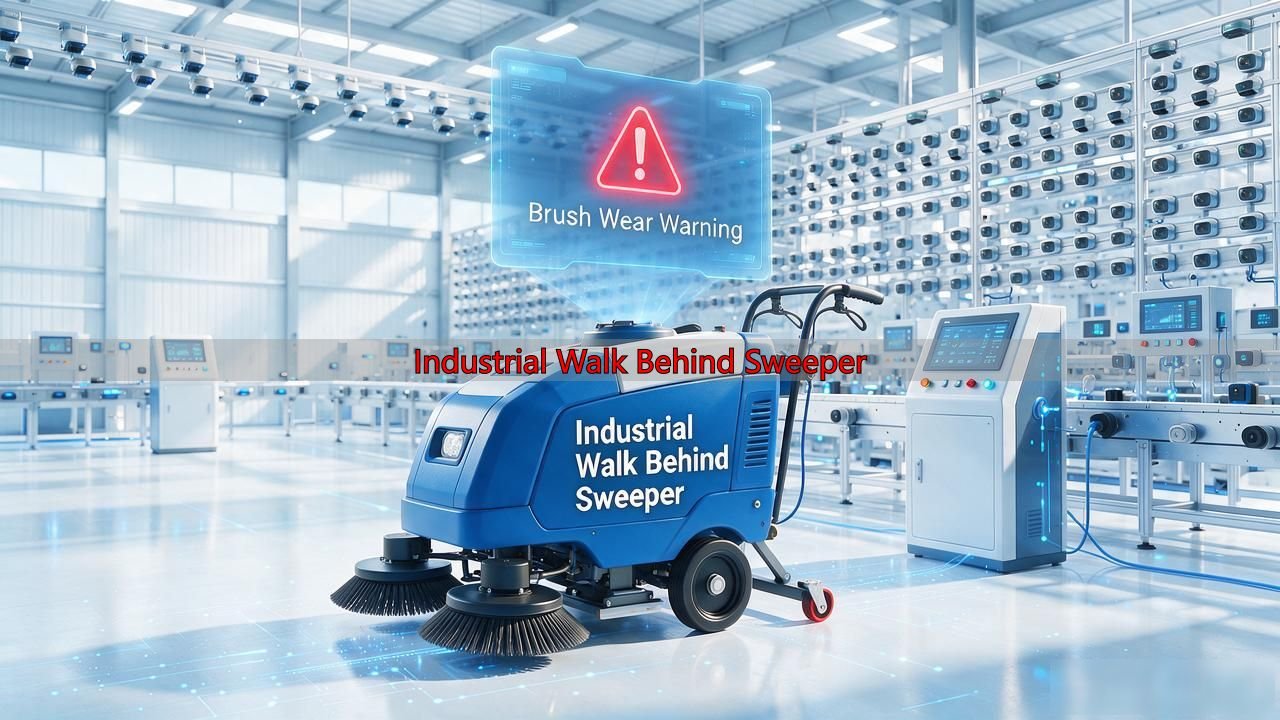
And let's not ignore the era we're operating in. 2020s factories run leaner, sensor-laden, and with zero tolerance for unplanned downtime. A walk behind industrial sweeper that plugs into your facility's maintenance software, flags brush wear before it actually happens, and alerts you days ahead of a breakdown—that's the new baseline, not a luxury. Tanjie's newer models track operating hours, filter life, and brush condition on a straightforward dashboard. You stop guessing, you stop scheduling unnecessary overhauls, and you simply know when something needs attention. That's peace of mind with a real productivity payoff.
Still, be honest with yourself for a moment. If your current process means one person pushing a broom across five thousand square meters of concrete every single shift, you aren't saving money. You're wearing people out . The quiet math on labor overtime, missed spots, and re-sweeping erodes your margin month after month, and nobody flags it in a meeting.
The Occupational Safety and Health Administration has consistently listed repetitive manual sweeping among the top contributors to lower-back strain in warehouse and plant workers year after year. When you solve the efficiency problem with a walk behind industrial sweeper, you solve the safety problem in the very same purchase. No separate budget line. No new safety training cycle. That dual return—lower labor cost and lower injury risk—is the kind of line item your CFO actually celebrates on a quarterly report, and it makes the business case write itself.
Think about the maintenance side, too. A walk behind industrial sweeper is not a set-and-forget appliance, but with basic brush and belt checks every hundred hours, you're looking at a machine that runs for years with minimal parts. Compare that to the endless replacement of brooms, dustpans, and the turnover cost of hiring and training new cleaning staff. The total cost of ownership tells a very different story than the sticker price suggests, and over three to five years the gap widens dramatically in the machine's favor.
So here is your move, and it's simpler than you think. Walk through your facility this week. Time how long a human crew takes to clear one production zone. Then put a walk behind industrial sweeper on that same floor and time it . The gap will make the decision for you before finance even gets involved. Reach out to Anhui Tanjie International Trading Co., Ltd. today, get a model matched to your exact layout, and stop letting dust set the pace in your operation. You built this factory to move fast. cleaning caught up!