 Anhui Tanjie International Trade Co., Ltd.


You're standing in a 5,000-square-meter warehouse, and the Bodenkehrmaschine you installed three months ago is already throwing errors. The dust on the ground isn't just ugly—it's a _safety hazard_ you didn't budget for. So here's the first thing I want you to do: stop scrolling, and ask yourself whether the Bodenkehrmaschine you picked was actually built for your floor.
That's the question most buyers never ask. And it's the one that separates a Bodenkehrmaschine that lasts five years from one sitting in the scrapyard by month six.
Let me walk you through a case you can feel the weight of.
A textile mill in Jiangsu ran a generic Bodenkehrmaschine on its concrete floors for two years. The brush system was designed for smooth asphalt, not for the fine cotton fiber dust that coated every surface. Within eighteen months, the suction motor burned out. The mill lost roughly ¥40,000 in repairs and three full days of production. The root cause? They bought a Bodenkehrmaschine by brand name, not by _floor type_.
What happened here is like stuffing a sports car into a muddy field. The engine was built for a different road entirely.
Then there's the logistics center in Anhui that did it differently.
A 12 Bodenkehrmaschine ,000-square-meter hub went to _Anhui Tanjie Environmental Technology Co., Ltd._, the R&D and manufacturing arm behind _Anhui Tanjie International Trading Co., Ltd._—the entity that handles the export side. The engineering team there recommended a mid-sized ride-on Bodenkehrmaschine with a dual-side brush layout and a 90-liter dust bin. Six months in, the dust load stayed within spec, battery cycles were holding, and no major repair had been logged.
Why did it work? Because the Bodenkehrmaschine was _matched to the workflow_, not the other way around.
So what should you actually check before you sign that purchase order? Here's the list:
1. Floor surface type. Concrete, asphalt, tile, polished epoxy—each demands a different brush hardness and suction strength. A Bodenkehrmaschine that's great on gravel will grind your epoxy finish to powder.
2. Daily coverage area. This decides whether you need a walk-behind Bodenkehrmaschine (under 300 m²) or a ride-on model (300 m² and up). Don't stretch a small Bodenkehrmaschine to do a big job.
3. Dust and debris profile. Fine powder, hair, wet sludge, or dry leaves? The filtration system of the Bodenkehrmaschine has to handle your specific waste, or the clog will come fast.
4. Battery versus gas. In enclosed warehouses, a battery-powered Bodenkehrmaschine is non-negotiable for ventilation. Outdoors, gas models work but add fumes you may not want near entry points.
5. After-sales parts pipeline. A Bodenkehrmaschine without a reliable parts supply is a ticking time bomb. Ask the supplier directly: "If the brush roller fails in eight months, how fast can you ship a replacement?"
Now, here's where it gets a little tricky. Most of the Bodenkehrmaschine buyers I've observed treat the machine like a commodity. Lowest price, fastest delivery, done. But a Bodenkehrmaschine isn't a light bulb. It's a small, rolling factory of motors, belts, sensors, and hydraulics. When one part degrades, the whole system's balance shifts. That's why the design origin of the Bodenkehrmaschine matters more than the sticker price.
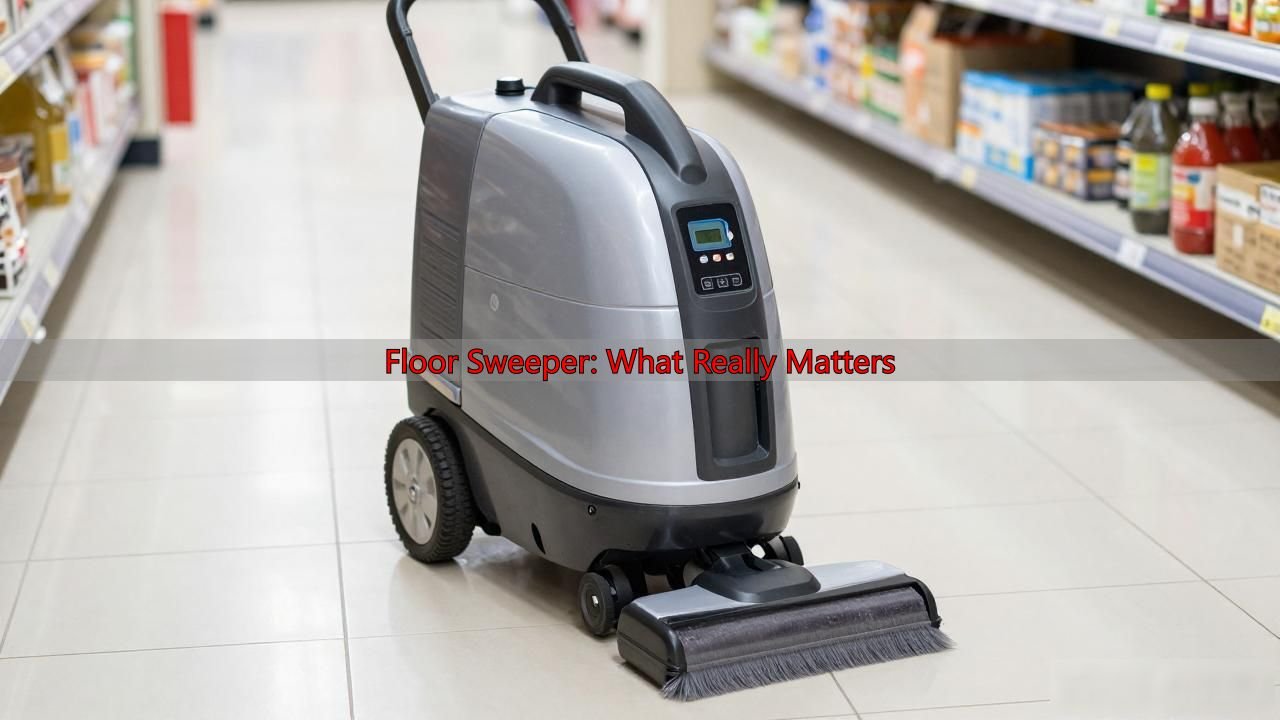
At Anhui Tanjie International Trading Co., Ltd., the export catalog lists the Bodenkehrmaschine models, but the engineering specs, the brush-to-suction ratio calculations, and the dust-bin capacity testing all come from the Tanjie Environmental Technology workshop in Anhui. The two companies share the same factory floor, the same QC bench, the same test tracks. The international trading entity simply wraps the export documentation, the CE and EPA paperwork, and the logistics into one clean package.
Think of it this way: the environmental technology side _builds the engine_, and the international trading side _drives it to your dock_.
A few numbers to keep in your head:
A standard 8-inch brush roller on a walk-behind Bodenkehrmaschine covers about 900 m² per hour at a steady 4 km/h pace.
A 14-inch dual-side ride-on Bodenkehrmaschine pushes that to roughly 2,800 m² per hour.
The dust bin on most mid-range Bodenkehrmaschine s holds between 60 and 120 liters. Fill it too high and the suction curve drops by fifteen to twenty percent.
These aren't marketing round numbers. They're the figures you'll see on the test reports from the Tanjie line.
Let's talk cost for a moment. A Bodenkehrmaschine that costs thirty percent less on day one but needs a brush replacement every four months and a motor overhaul every eighteen months will cost you _more_ over three years than a Bodenkehrmaschine with a slightly higher upfront price and a twelve-month service interval. Do the math on total cost of ownership, not on the invoice.
And here's the part most people skip: operator training. A Bodenkehrmaschine in untrained hands is a floor shredder. The operator who doesn't know to slow down at corners will tear up the brush bristles in a week. Fifteen minutes of guided training saves you a ¥2,000 brush set every single month.
So where does that leave you?
You've got a Bodenkehrmaschine sitting in a showroom, a spec sheet in your inbox, and a deadline on the calendar. The smart move is to go back to the five-point checklist, run your floor numbers against it, and then—only then—call the supplier. If you're dealing with the export side, that's _Anhui Tanjie International Trading Co., Ltd._ If you want to walk the test track in person, that's the _Anhui Tanjie Environmental Technology_ plant. Same people. Same machines. Different doors.
The Bodenkehrmaschine market in 2026 is quieter than it was in 2023. Prices have settled, the supply chain has normalized, and the Bodenkehrmaschine s that still stand out are the ones engineered for a _specific_ floor, not a generic one. That's the whole game.
Pick your Bodenkehrmaschine the way you'd pick a pair of boots for a particular trail. Not the fanciest boots in the shop. The ones that fit _your_ ground, _your_ distance, and your budget for a resole.
One last thing. If you've been running a Bodenkehrmaschine for over a year and the suction feels "a little off," don't wait for it to fail on a Tuesday at four pm Pull the filter, check the belt tension, log the operating hours. A Bodenkehrmaschine maintained at 500-hour intervals lives roughly twice as long as one left to itself. That's not a suggestion. That's physics.
So go ahead. Grab that checklist. Call the supplier. Get the right Bodenkehrmaschine on your floor before the next dust season hits.