 Anhui Tanjie International Trade Co., Ltd.


"Efficiency is not a luxury in industry. It is the floor you stand on." – Heinrich, Principles of Industrial Engineering
The Dust Problem Nobody Wants to Name
Walk into any manufacturing plant, warehouse, or logistics hub in 2026, and you will see the same silent adversary: fine particulate matter. Metal shavings. Flour dust. Tire residue. It settles on every surface, clogs filtration systems, and—here is the contrast that matters—while a manual broom looks like work, it actually spreads 80% of what it sweeps. The worker moves. The dust moves faster. That is the trap.
Die Antwort, for decades, has been one machine: the industrial sweeper .
But which one? Where do you even begin?
What Actually Is an Industrial Sweeper?
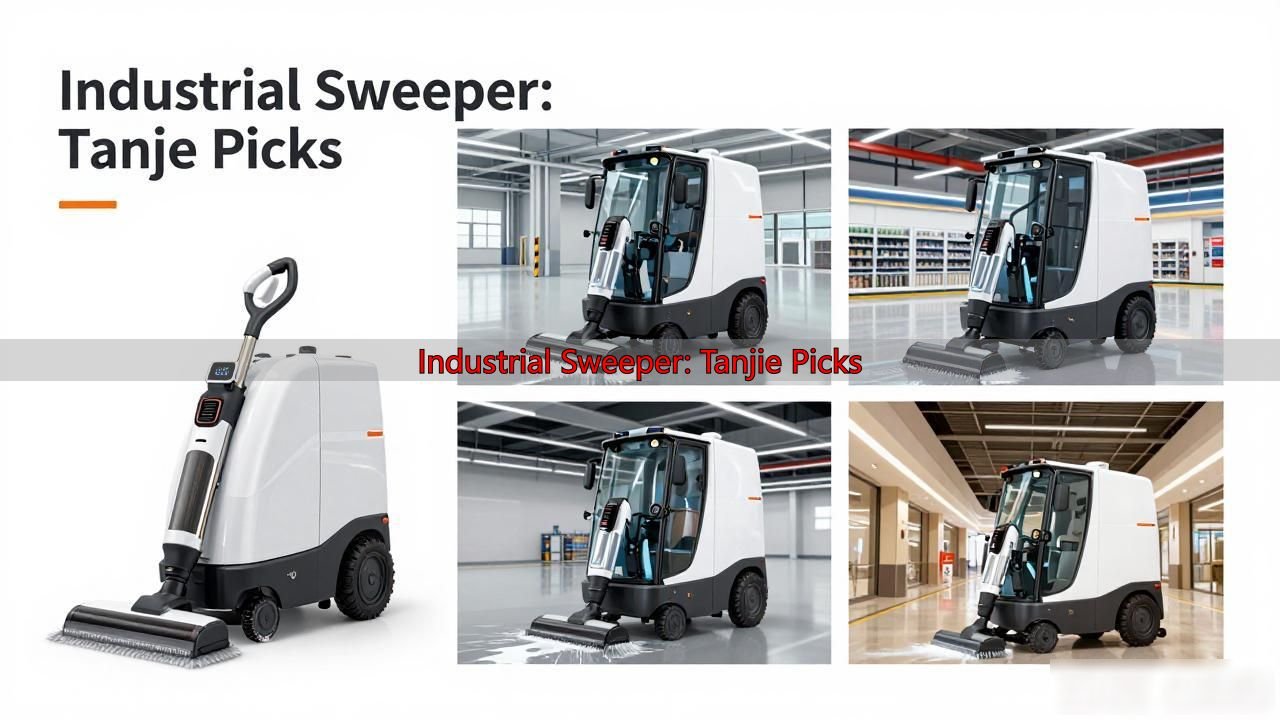
Strip away the marketing gloss. An industrial sweeper is a powered, ride-on or walk-behind unit that uses rotating brush assemblies, a vacuum suction system, and a debris tank to remove solid waste from large hard-floor surfaces in a single pass. Think of it as a closed loop: sweep, collect, store. No scattered debris. No secondary cleanup.
The micro detail most buyers miss: brush pressure. A $2,000 unit might press a brush against the floor at 15 newtons. A properly engineered machine presses at 40–60 newtons, adjusting for material load. That difference is the line between "it looks clean" and "it is clean."
Tanjie: The Export Face of a Factory You Have Not Heard of
Here is where the name confusion starts, and it deserves a clear answer.
Anhui Tanjie Environmental Technology Co., Ltd. (Anhui Tanjie Environmental Technology Co., Ltd.) is the manufacturing and R&D entity. It designs, builds, and tests the sweeper units on its own production floor in Anhui, China.
Anhui Tanjie International Trading Co., Ltd. (Anhui Tanjie International Trading Co., Ltd.) is the export and trade arm. Every unit that leaves the country ships under this name.
Same company. One roof. Two nameplates. The trading entity handles certifications (CE,EPA registration where applicable) Industrial sweeper , logistics, after-sales documentation, and export compliance. If you are sourcing an industrial sweeper for a plant in Rotterdam, Riyadh, or Bogotá, the invoice will read "Tanjie International Trading." The machine, however, was born at the Environmental Technology workshop.
This dual-structure is not a red flag. It is a standard Chinese export architecture that keeps compliance and manufacturing cleanly separated.
Five Things to Check Before You Order
Treat this as a buyer's checklist, the kind your procurement team should pin above the spreadsheet:
1. Brush type and speed. Disc brush vs. cylindrical brush. Disc handles carpet and uneven floors; cylindrical wins on concrete. Ask for RPM.
2. Suction vacuum kilopascals. Below 6 kPa, fine dust will blow back out the exhaust. You will be sweeping with the sweeper.
3. Debris tank capacity. A 150-liter tank means one full shift without stopping. A 60-liter tank means three refills. Math your shift.
4. Battery chemistry and runtime. LiFePO₄ is the 2026 default. Ask for nominal and cutoff voltage, not just "lasts all day."
5. After-parts availability. A machine without a local parts depot is a liability after warranty. Confirm Tanjie's regional stock points in your country.
Self-question you will hear in every trade fair hallway: "Is the price low enough?" The honest answer: price is the wrong first question. The right first question is "What is my cost per square meter per year, including downtime?" A cheap sweeper that fails weekly costs more. That is the contrast most purchasing departments dodge.
Where Tanjie Fits in the Global Map
Tanjie units have been deployed in:
European food-processing plants (IP65-rated, washdown-safe)
Middle-East desert logistics yards (sand-tolerant brush guards)
Southeast Asian electronics fabs (HEPA-filtered exhaust)
North American distribution centers (OSHA-compliant pedestrian detection)
Cross-regional, Ja. The hardware is the same core platform; the software presets and safety packages shift per market.
The Next Five Years (And Why It Matters Now)
The trend line is clear. By 2030, roughly 40% of new industrial sweeper sales will include some form of autonomy—lidar mapping, obstacle avoidance, scheduled routes. Tanjie's current product line already ships with CAN-bus sensor interfaces and an API layer for fleet-management platforms. In plain language: you can plug a Tanjie unit into your existing IoT dashboard today. You do not need to wait for "the future robot." The future is a firmware update away.
A Word on the Sales Pitch You Are About to Ignore
You will be told that "every sweeper is the same." You will be told that "the brand does not matter, only the price." These are the two most expensive sentences in procurement. A sweeper is a small machine with a large footprint on your safety audits, your environmental permits, and your floor-labor costs. Brand matters. Engineering depth matters. The 40-newton brush pressure matters.
Final Thought
The machine is not the point. The point is the dust that used to be a slow, invisible tax on your people, your equipment, and your bottom line. Remove the tax, and the factory breathes.
"A clean floor is not a luxury. It is a liability removed." – Adapted from OSHA 2025 Workplace Safety Report, p. 47